Changsha Stinky Tofu: The Smell Is a Test, Not a Warning
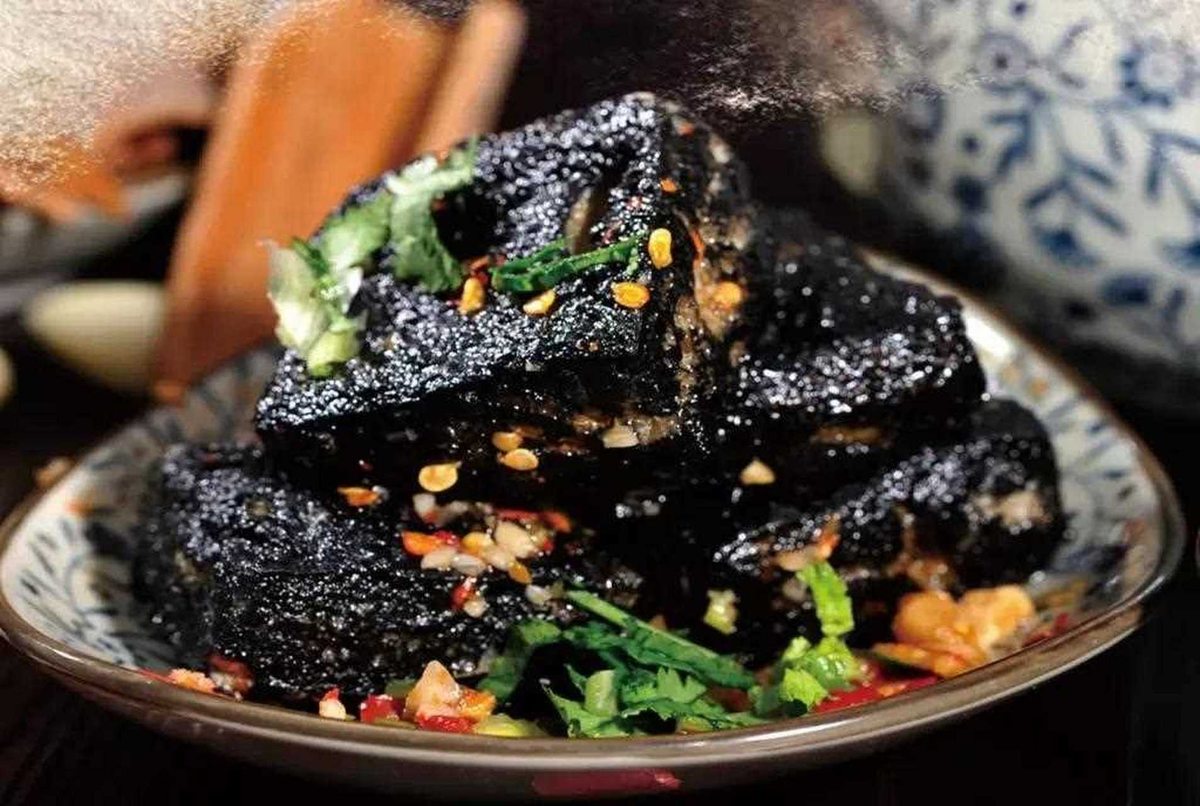
The smell reaches you a full block before the stall does, and the smell says: turn around. You're walking a Changsha food street that's been frying for hours, and somewhere up ahead a vendor is cooking something that, by every signal your nose was ever trained to send, has gone badly wrong. Fermented. Pungent. A little like a gym bag left in a summer car, a little like a cheese that decided to fight back. Every instinct you have says keep walking.
Ignore all of them. That smell is coming from a cube of tofu, black as charcoal, hissing in a pan of oil, and it's about to be the best thing you eat this week. Follow it, and you'll find a man with a pair of long wooden chopsticks turning black cubes in oil that snaps and spits, working with the focus of someone handling something fragile and hot.
That's the first lie stinky tofu tells. It smells like a warning, but it's really a filter.
I grew up in Shanghai, and I thought I knew stinky tofu. In Shanghai it's golden, cut into small squares, fried crisp and handed over in a paper bag with two sauces — one sweet, one spicy, both poured straight into the hollow of the tofu so you get crunch and liquid in the same bite. I ate it after school when I could, standing on the curb with a little wooden fork, and I'd have told you I was an authority. It smells a little funky. It does not smell like this.
So the first time I stood in front of a Changsha stall and watched a man tong black cubes out of smoking oil, I told myself: that's not the stinky tofu I know, and that can't be a good thing.
I was wrong about the second part.
Here's what's actually happening in that pan, because the dish hides its own work. Real Changsha stinky tofu (长沙臭豆腐, chángshā chòu dòufu) doesn't get its smell from anything rotting. It gets it from a brine — 卤水 (lǔ shuǐ) — a dark, living liquid a good vendor has been feeding for months or years, the way you feed a sourdough starter, built from fermented vegetables and amaranth stalks and bamboo shoots and its own slow chemistry. The tofu soaks in that brine until it stains black on the outside and takes on a funk no fryer could ever give it. Then it's fried until the shell blisters hollow, and the inside — the part nobody warns you about — stays custardy and hot and somehow clean.
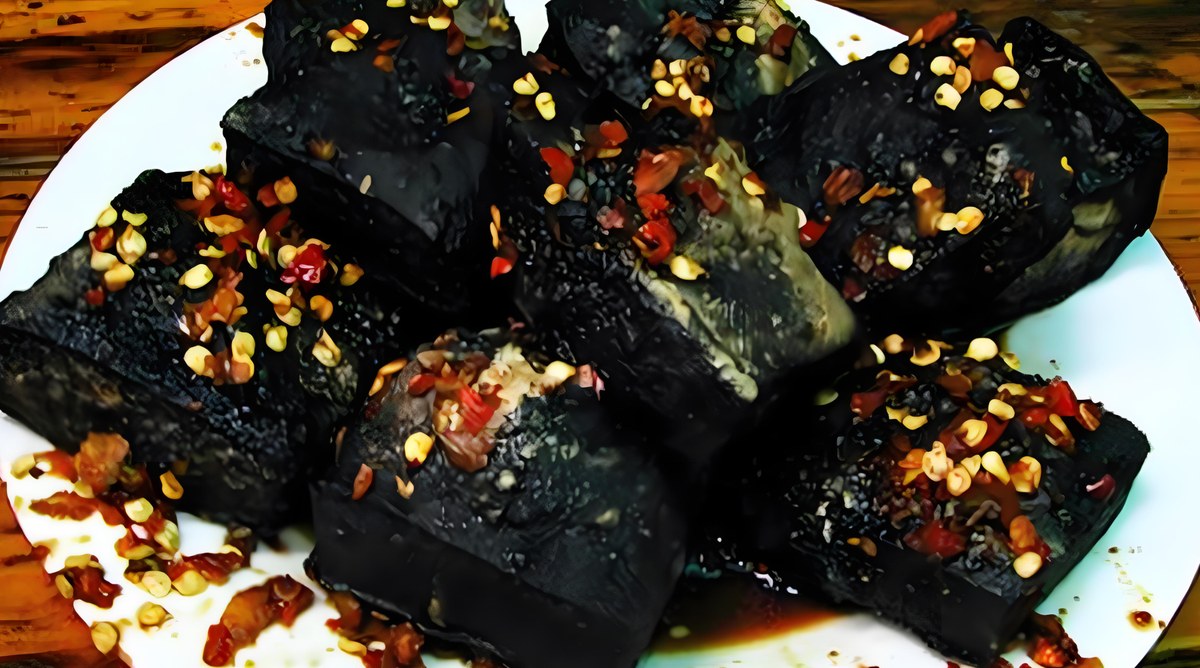
The smell is a byproduct of the brine. It is not the point of it. The point is the funk, which is a flavor, not a defect.
You'll get it in a paper bowl, black cubes poked onto a bamboo skewer or cut open and drowned in chopped chili, garlic water, a spoon of the same brine, and a scatter of fresh cilantro. Take the first one fast, while it's too hot to be polite. The shell doesn't give — it snaps, and the sound is half the pleasure. Then the heat, then the chili and garlic, then underneath it all that deep fermented note your nose was screaming about settles into something savory and almost sweet. The inside steams against your teeth. Your eyes may water from the chili and you won't care.
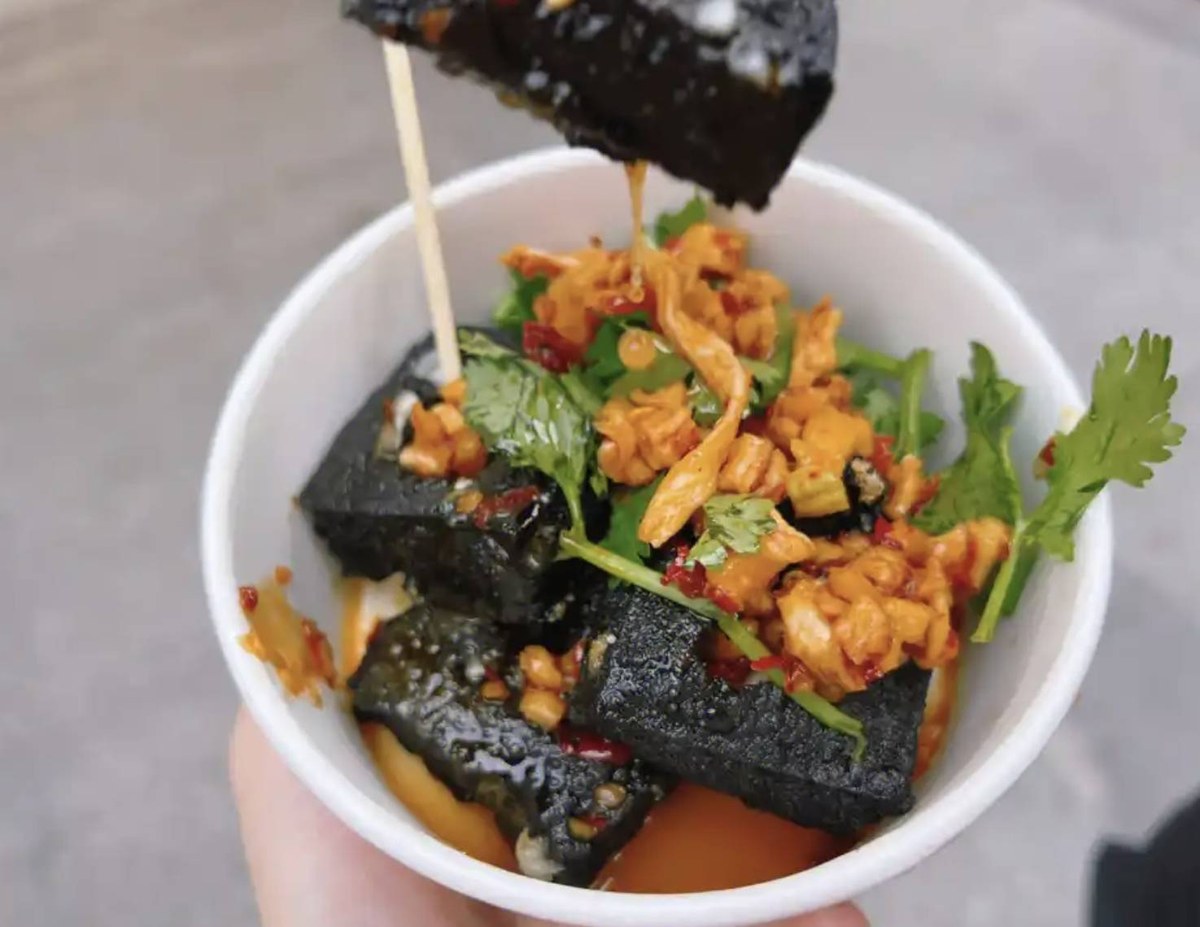
The city has a phrase for it — 闻起来臭,吃起来香 (wén qǐlai chòu, chī qǐlai xiāng): smells awful, eats fragrant. It's not a slogan. It's a physics lesson.
Nobody agrees where it started. The story I like is the broke one: a Qing-era scholar who failed his exams and turned to making tofu to live, and one day found his leftovers had gone black in the brine and fried them anyway rather than throw out money. The dish survived because the flavor survived. That's all the history you need — a poor man too stubborn to waste food invented his city's favorite snack.
And a dish this famous attracts shortcuts. The tourist version is tofu that's been dyed or briefly marinated and fried, then buried under sauce — it smells faintly of a gym sock and tastes of nothing, which is the actual crime. If it doesn't smell like it might have a past, it doesn't have a past. The other fake is just old fryer oil and salt: that's not stinky tofu, that's a crouton with an attitude. The real thing smells loud and tastes deep, and the sauce is a partner to the funk, not a mask for it.
Eat it standing up, at the stall, off the skewer, because this is street food and it doesn't survive a sit-down. Bite a corner off first and let the steam out, or you'll burn the roof of your mouth — I've done it, I'll do it again. Then load on whatever chili the vendor offers and go again. Order a second bowl if the first one disappears on you, which it will. There's no wrong hour for it; Changsha eats it in the morning, and so should you.
Here's the thing nobody tells you: the smell isn't the price of admission, it's the test. The people who stop at the smell miss the best snack in Hunan, and the people who push through it get the secret — that the same chemistry that made the warning made the flavor. I still can't get my head around how a thing can smell like that and taste like that. Every time I try to explain it, I end up back in line for another bowl.
The brine is the whole trick. Building one — weeks of feeding, the thing that decides whether your tofu smells like a mistake or a secret — deserves its own post.
💬 Comments