Century Egg: The Black Egg the West Has Misunderstood for a Century
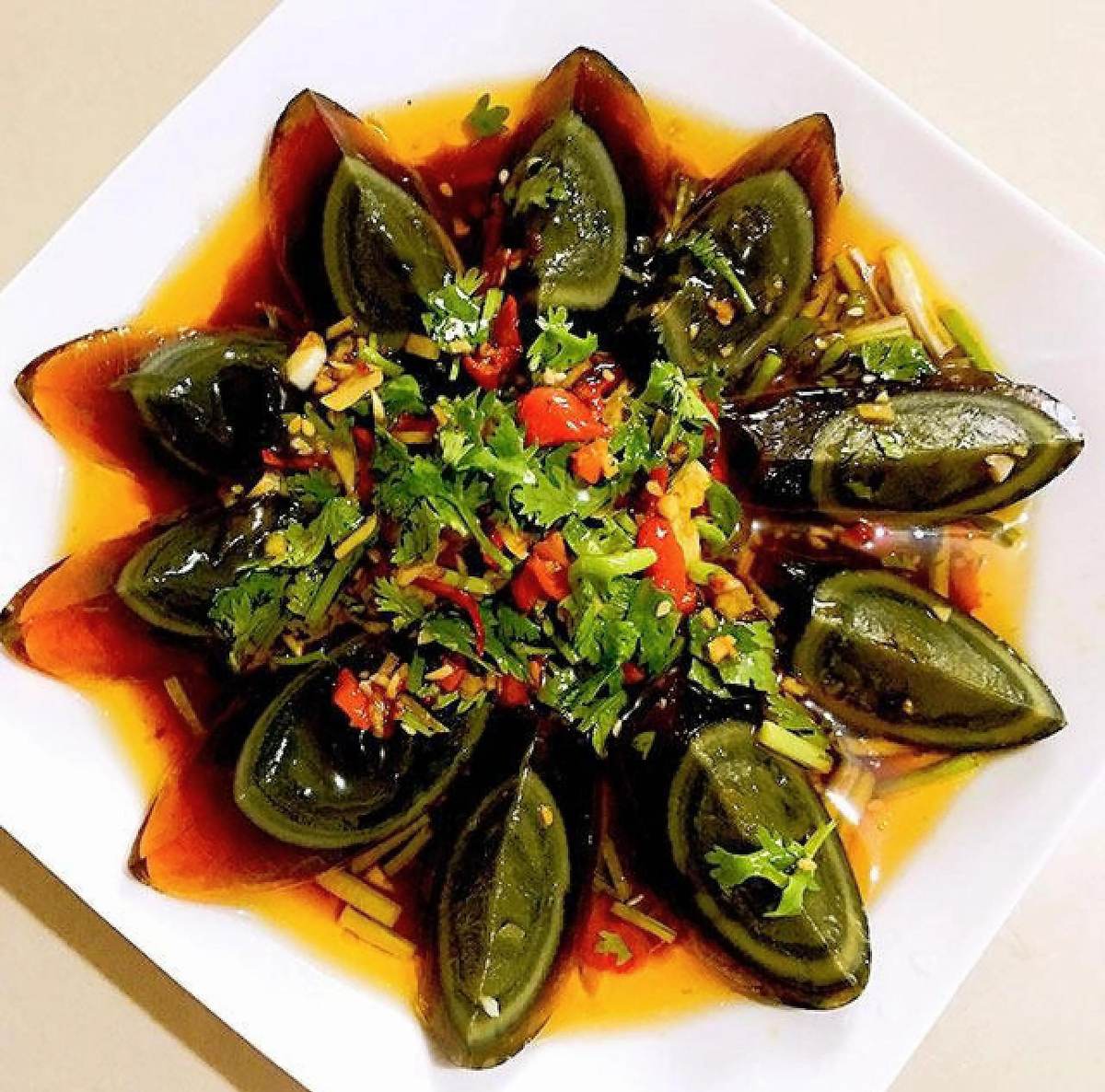
The egg hits the plate and the room goes quiet in a way that has nothing to do with appetite. It's the color that gets people. The white isn't white — it's a translucent amber, the color of tea stained through glass. The yolk isn't yellow — it's a deep green-black, soft at the center, the color of a pond at midnight. If you've never seen it before, your brain files it under "do not eat." Your nose, if you're honest, files it under "maybe."
This is the Century Egg (皮蛋, pídàn), also called the Thousand-Year Egg, and it is neither a century nor a thousand years old, and it is not rotten. It is preserved — a duck egg buried in a paste of ash, salt, quicklime, and tea, and left to transform for a few weeks to a few months. What comes out looks like an artifact. What it tastes like is one of the cleanest, creamiest, most quietly luxurious things you can put in your mouth.
I grew up eating it in congee — the Shanghai breakfast of my childhood, a bowl of plain rice porridge with dark flecks of century egg stirred through, a scatter of lean pork, a spoon of soy. My grandmother would crack one over the porridge and the yolk would come out soft as ganache, and I'd eat it without thinking, the way you eat anything that's always just been there. It was only later, when I watched a table of American colleagues recoil from a plate of it, that I understood how weird it looks to the rest of the world.
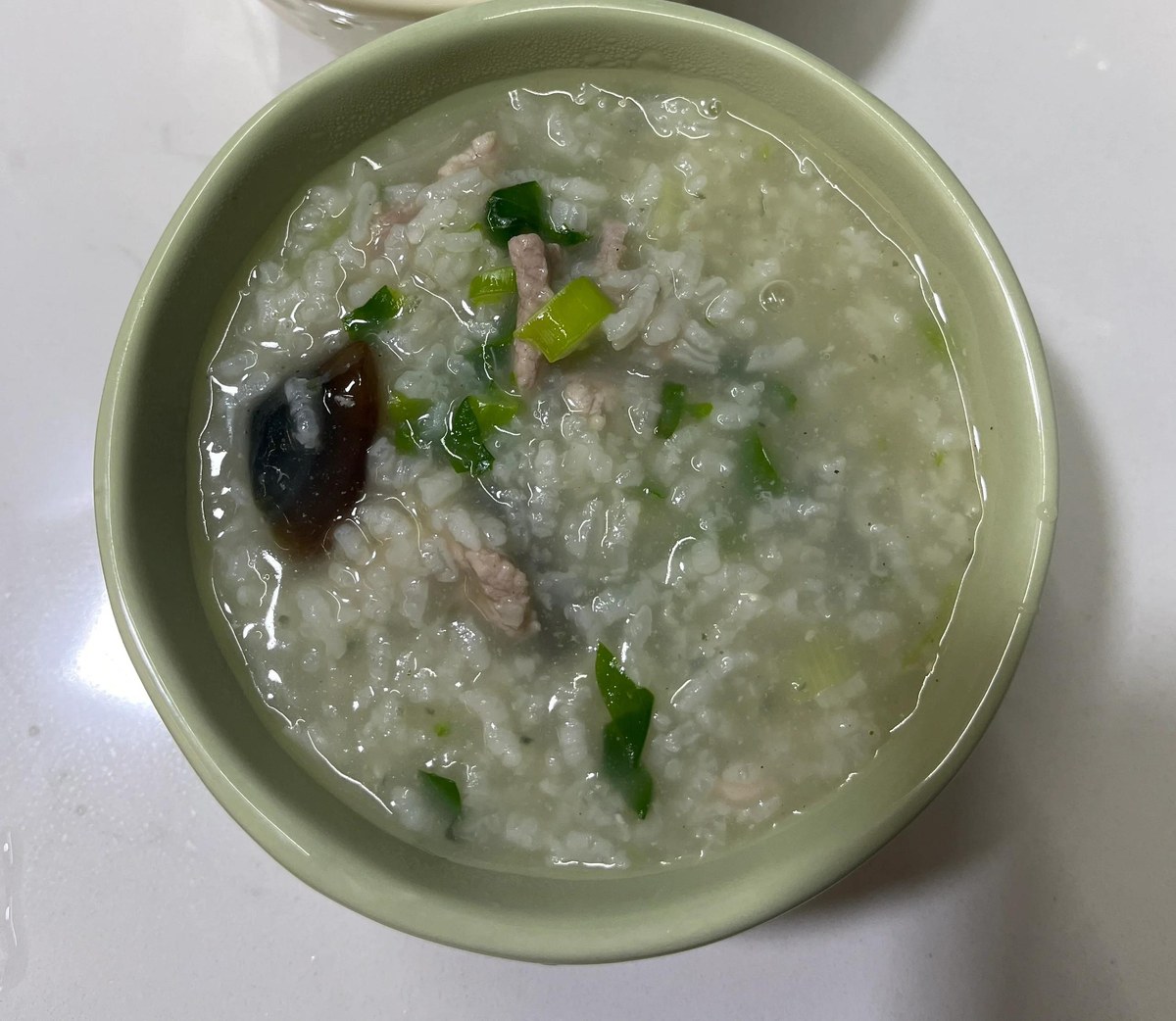
Century Egg (皮蛋, pídàn) is the most misunderstood egg on earth. The West has spent a century calling it rotten. China has spent a millennium calling it breakfast.
The Architecture of a Transformation
I've spent thirteen years building systems at three tech giants, and I've learned that the most elegant processes are the ones you can't see working. The Century Egg is a chemical reaction you can watch for weeks and never catch in the act — until one day it's just done.
The chemistry. Raw duck eggs, usually, go into a coating of clay, ash, salt, quicklime, and rice husk. The alkaline quicklime raises the pH, and over weeks the proteins in the egg denature and re-set into that jelly-like amber. The yolk darkens as amino acids and sugars react — the same browning reaction that turns a steak crust dark, just slower and stranger. Nothing rots. The high alkalinity makes it inhospitable to the bacteria that would rot it. It's not decay. It's preservation, done with chemistry instead of a fridge.
The white. Gone from clear to a dark amber jelly, with a faint pattern of snowflake-like crystals across it — sōnghuā, "pine flowers," the reason the egg's other name is 松花蛋 (sōnghuā dàn). Those crystals are amino acid salts, and they're a sign the egg was aged properly. It's firm but not rubbery, and it tastes faintly of tea and sulfur.
The yolk. This is the crown. It goes from bright yellow to a deep green-black, soft and creamy at the center, denser toward the edge. The flavor is impossible to describe to someone who hasn't had it: eggy, savory, with a low sulfury funk that reads as "rich" once your palate stops panicking. It coats your mouth the way a good cheese does.
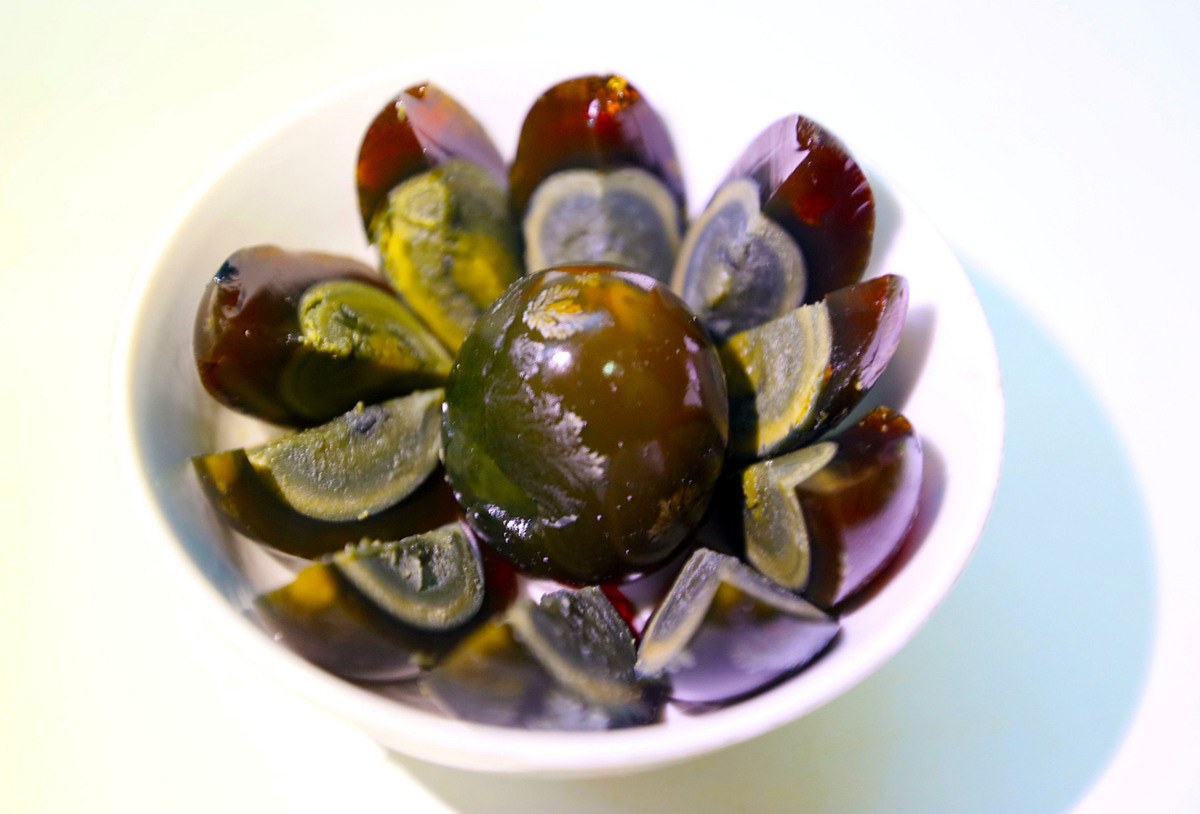
A good century egg is quiet luxury. A bad one tastes like ammonia and betrayal.
The Origin
Nobody knows exactly who buried the first egg. The usual story is a Ming dynasty household in Hunan found eggs in a lime pit and, being practical people, ate them. The timeline is fuzzy — some version of it goes back centuries. What matters is that the technique stuck, because it solved a real problem: how to keep eggs edible for months without refrigeration, in a country that loves an egg for breakfast.
The Enemies of Century Egg
The Ammonia Version. A badly-aged egg — aged too fast, or too long, or with the wrong alkalinity — tastes of ammonia and burns a little at the back of your throat. A good century egg has a whisper of sulfur and no ammonia at all. If it smells like a janitor's closet, it's either a bad egg or a cheap one. Spit it out.
The "It's Rotten" Version. This is the Western myth, and it's worth killing for good: a century egg is not a rotten egg. A rotten egg is soft, swollen, sulfurous, and dangerous. A century egg is firm, clean, and safe — the alkalinity literally prevents the rot. The two are as different as a cave-aged cheese and a spoiled carton of milk. Conflating them is a category error, not a taste judgment.
The Raw, Eaten-Whole Version. Some tourists are handed a whole century egg and told to bite into it like an apple. That's not how anyone in China eats it. It's a condiment, a component, a flavor — not a hand fruit. Eating a whole one plain is like eating a spoon of anchovy paste and concluding you don't like fish.
The right century egg: aged to a deep amber white and a creamy green-black yolk, no ammonia, served cold and sliced with ginger, soy, and a little vinegar — or stirred into hot congee. It's not a dare. It's a delicacy.
Century Egg vs Salted Duck Egg
Two preserved eggs, one word — "preserved" — and completely different animals. If you've had one and not the other, you haven't had the half of it.
| Century Egg | Salted Duck Egg | |
|---|---|---|
| Method | Alkaline coating, chemical set | Brine or salt-packed, cured |
| White | Amber jelly | White, firm, salty |
| Yolk | Green-black, creamy | Orange, dry, oily, crumbly |
| Flavor | Sulfury, savory, mild | Intensely salty, rich |
| Eat with | Congee, tofu, ginger | Congee, mooncakes, rice |
| Soul | The transformation | The salt |
The simplest test: break it over a bowl. If the white jiggles amber and the yolk oozes black-green, it's a century egg. If the white is firm and the yolk crumbles dry and orange, it's a salted duck egg. Both belong in your congee. Only one will scare your guests.
How to Eat It
You eat a century egg cold, sliced, and never alone. The classic is the breakfast of my childhood: hot plain congee, a century egg cut into dark half-moons stirred through, a scatter of lean pork, soy sauce, and a few drops of sesame oil. The heat of the porridge wakes up the egg's creaminess; the egg's funk gives the plain rice something to stand on. Or do it Shanghai-cold: sliced egg over silken tofu, with ginger, scallion, soy, and a drizzle of sesame oil. The tofu is the canvas, the egg is the paint.
The one rule my grandmother enforced, in Shanghainese, over every bowl: 慢慢吃 — eat it slow. A century egg isn't food you wolf down. It's a texture you let happen, a flavor that arrives in layers. You don't eat it to get full. You eat it to pay attention.
I'll save the home-cooking breakdown for another post. Making your own century egg — the alkaline coating, the weeks of waiting, the exact pH that turns a yolk to green-black cream — that deserves its own deep dive. Recipe coming soon.
💬 Comments