Buddha Jumps Over the Wall: One Jar, Three Days, No Water
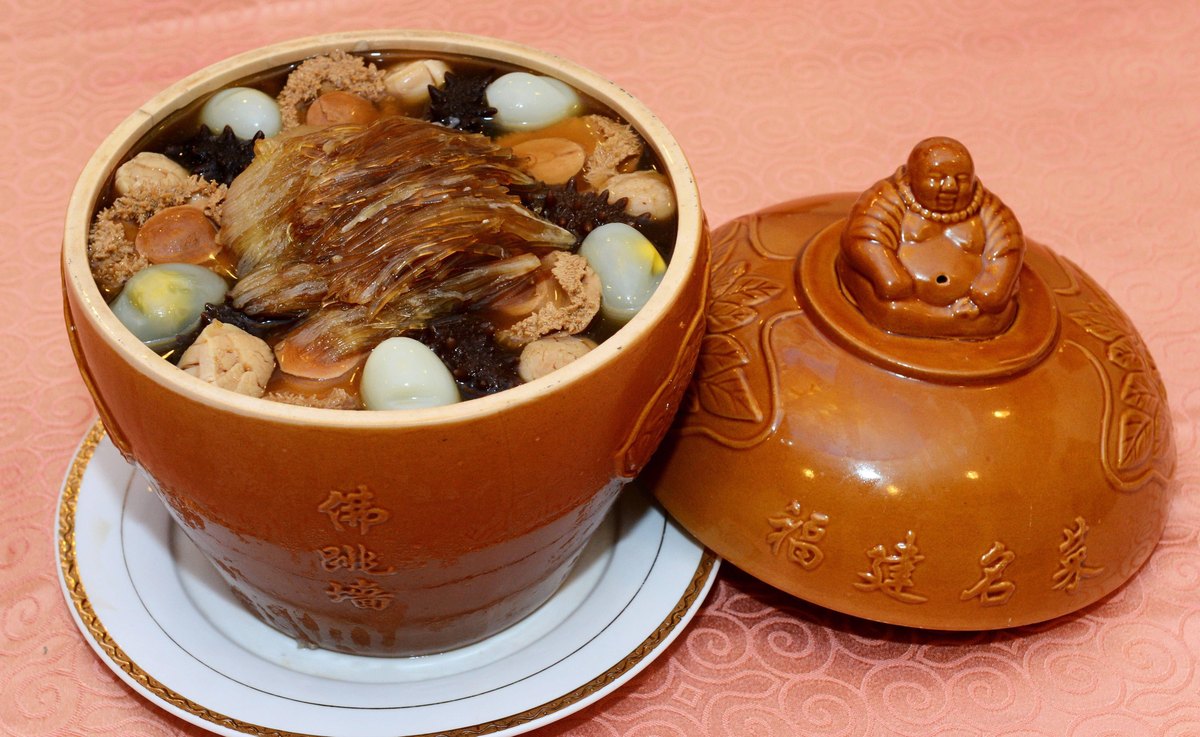
The lid doesn't come off. It has to be broken.
The waiter sets the jar down — squat, dark-glazed, wider at the belly than the mouth, sealed shut with a disc of dough that went in soft and came out hard as a plate. He takes the back of a knife and taps the crust once, twice, until it splits along a line and lifts away. Steam comes out first. Then the smell.
It's not one smell. That's what nobody tells you. It's eight of them arriving together — dried scallop, Jinhua ham, Shaoxing wine, shiitake, the burnt-sugar edge of braised abalone — and under all of it something darker and older, like the inside of a cupboard. The first time I smelled it I was twenty-four, at a cousin's wedding in Fuzhou, and I stopped talking in the middle of a sentence. So did everyone else. Sixteen people at one round table, one jar, and about five seconds of complete silence.
That jar was 佛跳墙 (fó tiào qiáng) — Buddha Jumps Over the Wall. The most expensive dish in Chinese cooking, and the easiest one on earth to fake.
A cook who refused
Fuzhou, 1870s, a kitchen behind the yamen of a provincial official. The cook's name was 郑春发 (Zhèng Chūnfa), and the household already had a dish: 福寿全 (fú shòu quán), "fortune, longevity, completeness" — a jar of everything good in the market, simmered slow. Zheng didn't invent it. What he did, mostly, was refuse things.
He refused to add water. He refused to hurry it. And he refused to put the expensive ingredients in first, which is the mistake every impatient cook makes, because the expensive things are the ones you want to look at.
What he understood — and what most kitchens serving this dish today have forgotten — is that 佛跳墙 is not a soup. It's a stack.
You build it in layers, and the order matters more than the shopping list. At the bottom, the cheap tough things that will give up everything they own over eight hours: chicken bones, pork knuckle, ham hock, chicken feet. Their job is to stop being meat and become liquid. In the middle, things with body — pork tendon, shiitake, bamboo shoot, quail eggs, fish maw. On top, sitting above the liquid line where they steam instead of boil, the fragile expensive ones: abalone, sea cucumber, dried scallop.
Then you seal it. Dough around the rim, a lotus leaf under it, and you don't open it again. No stock, no water, no top-up. Every drop of liquid in that jar comes out of the ingredients themselves. This is the whole trick, and it can't be shortcut: pour in stock to save four hours and you've made a very good seafood stew while throwing away the reason the dish exists.
The name came later, from a poet at a banquet who had clearly been drinking: 坛启荤香飘四邻,佛闻弃禅跳墙来. The jar opens, the aroma reaches the neighbors; the Buddha smells it, abandons his meditation, and jumps over the wall. Fuzhou has been repeating that line for a hundred and fifty years, and 聚春园 — Zheng's restaurant, still trading on Bayiqi Road — has sold the dish under the name ever since.
What eight hours does to a sea cucumber
Texture is the argument. Half the ingredients in that jar have almost no flavor of their own; they're in there for how they feel against your teeth. Sea cucumber is the strangest — gelatinous, faintly resistant, then gone. Abalone gives, springs, gives. Fish maw is a sponge that has spent all night absorbing ham and wine, so it releases a mouthful of liquid when you bite. Tendon goes sticky in a way that glues your lips together slightly. The quail egg is the only honest thing in the jar; it tastes like an egg.
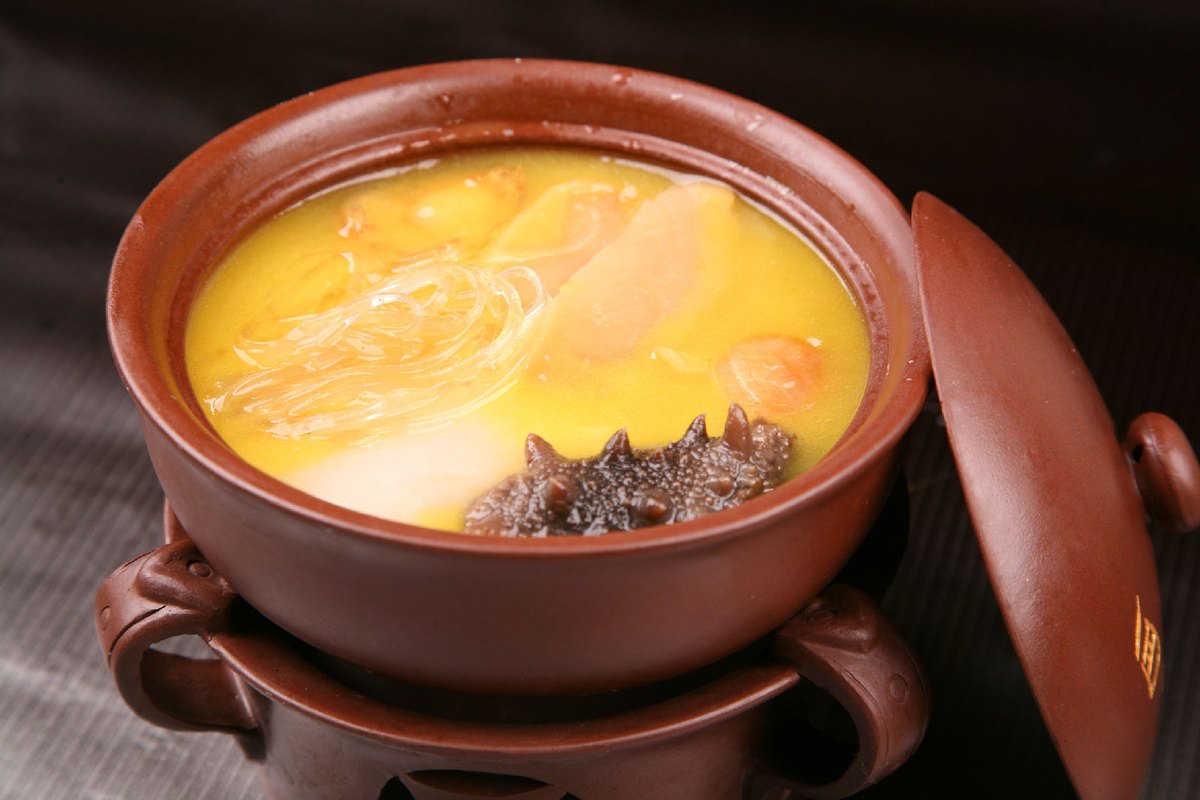
And the liquid underneath is not thick. It looks thin, almost watery, and it is the most concentrated thing you'll eat all year. If it coats the back of a spoon like gravy, somebody added cornstarch, and what you're eating is gravy.
How it goes wrong
The chain-restaurant version. Ninety-eight yuan, white ceramic bowl, on the table in four minutes: cornstarch body, three frozen shrimp, a few rubbery slices of sea cucumber that taste of nothing because somebody rehydrated them badly and boiled them fast. That isn't a cheaper 佛跳墙. It's a different dish wearing the name.
The hotel buffet version, held over a bain-marie since noon. The sea cucumber has dissolved into the liquid and the scallop has gone to chalk. Luxury ingredients don't survive being kept warm for six hours. They barely survive being cooked.
The diced version — everything cut small and boiled together like chowder — which turns the whole thing into a brown stew with a luxury price on it. If you can't identify what you're eating, the kitchen wasn't paying attention either.
And the canned one. There are retort pouches now. I have nothing to say about those that wouldn't get this blog demonetized.
The right way, which is slowly
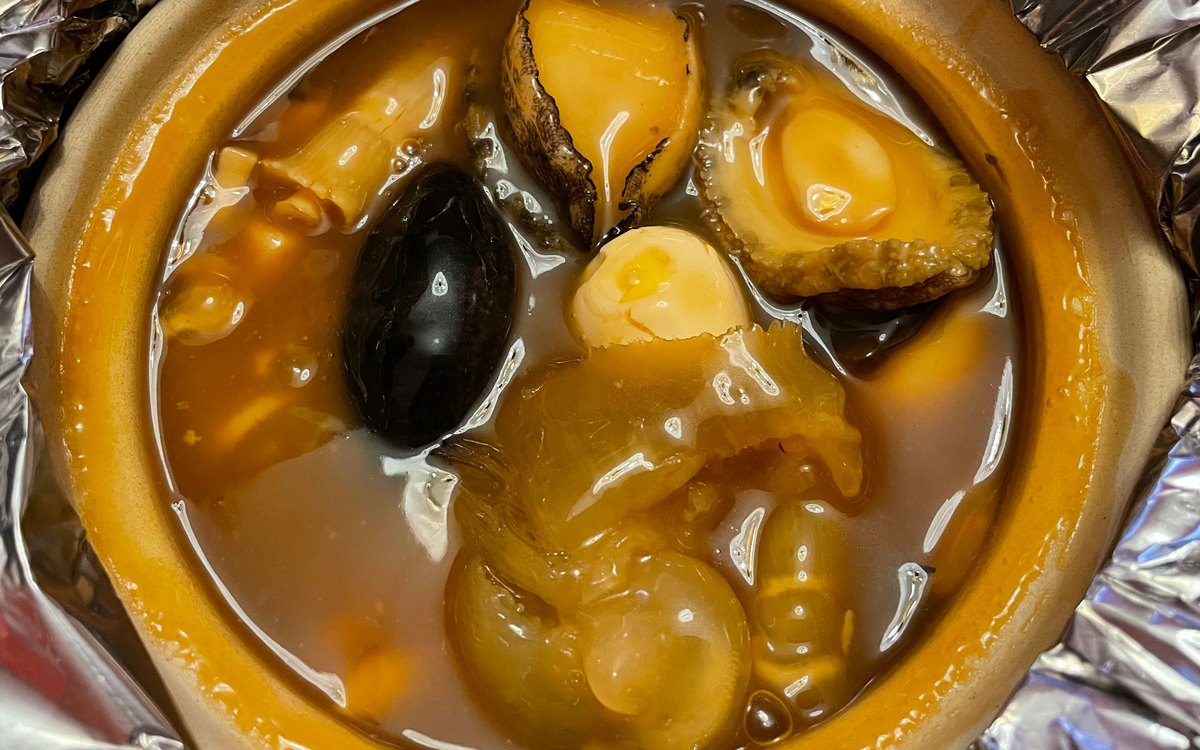
You don't put rice in it. Not at the start, anyway. You take a small bowl of the liquid alone — no garnish, no vinegar, no chili oil — and drink it while it's still hot enough to sting. That's the entire dish in one sip; everything after it is a variation.
Then the abalone, whole, one or two bites. Then the sea cucumber before it cools and turns to water. Then the fish maw, which by that point is mostly liquid itself.
The bottom of the jar — the bones and feet that did the work and got no credit — goes over a bowl of plain rice at the end, if the restaurant will give it to you. My uncle did exactly that at the wedding, scraping the last dark spoonfuls onto white rice, saying nothing, nodding at nobody in particular.
The jar stays hot for forty minutes. It was built to be eaten slowly, by people with nowhere else to be. That's the part I keep coming back to: two days to make, and it rewards you for taking an hour to eat it. Nothing about it is in a hurry. Neither should you be.
💬 Comments