Braised Sea Cucumber: A Dish Made of Onions and Patience
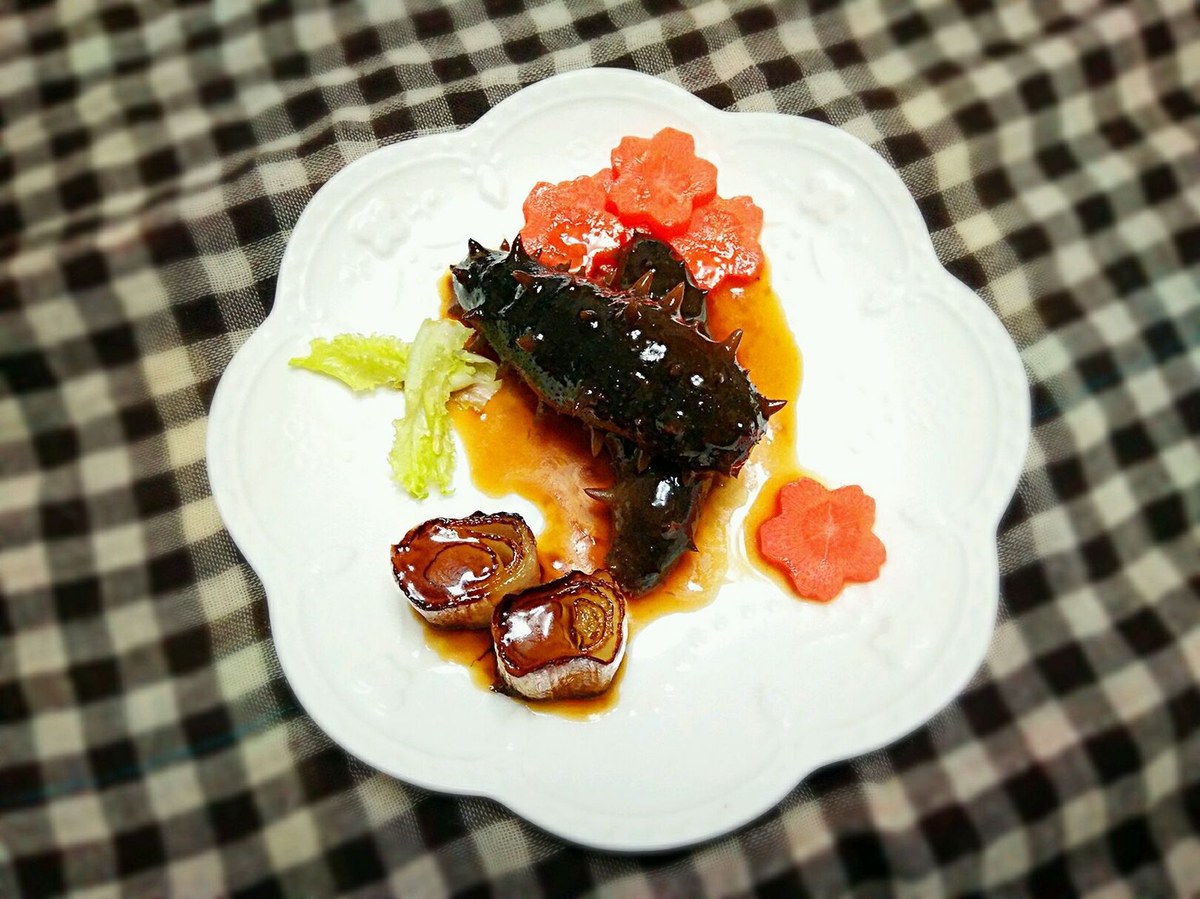
The scallions go into cold oil and nothing happens. That is the whole trick. A Shandong cook drops a fistful of thick white scallion bottoms into a wok of cold peanut oil, turns the flame down to something that barely deserves the name, and then stands there. Twenty minutes. Thirty. The oil goes cloudy, then clears, then gold. Tiny bubbles crawl up the sides of the scallions and burst. What comes off the wok is sweet and faintly toasty and about ten times deeper than anything a hot pan will give you.
He isn't cooking yet. He's making 葱油 (cōng yóu), scallion oil, and for the next hour that oil is the most valuable thing in the building.
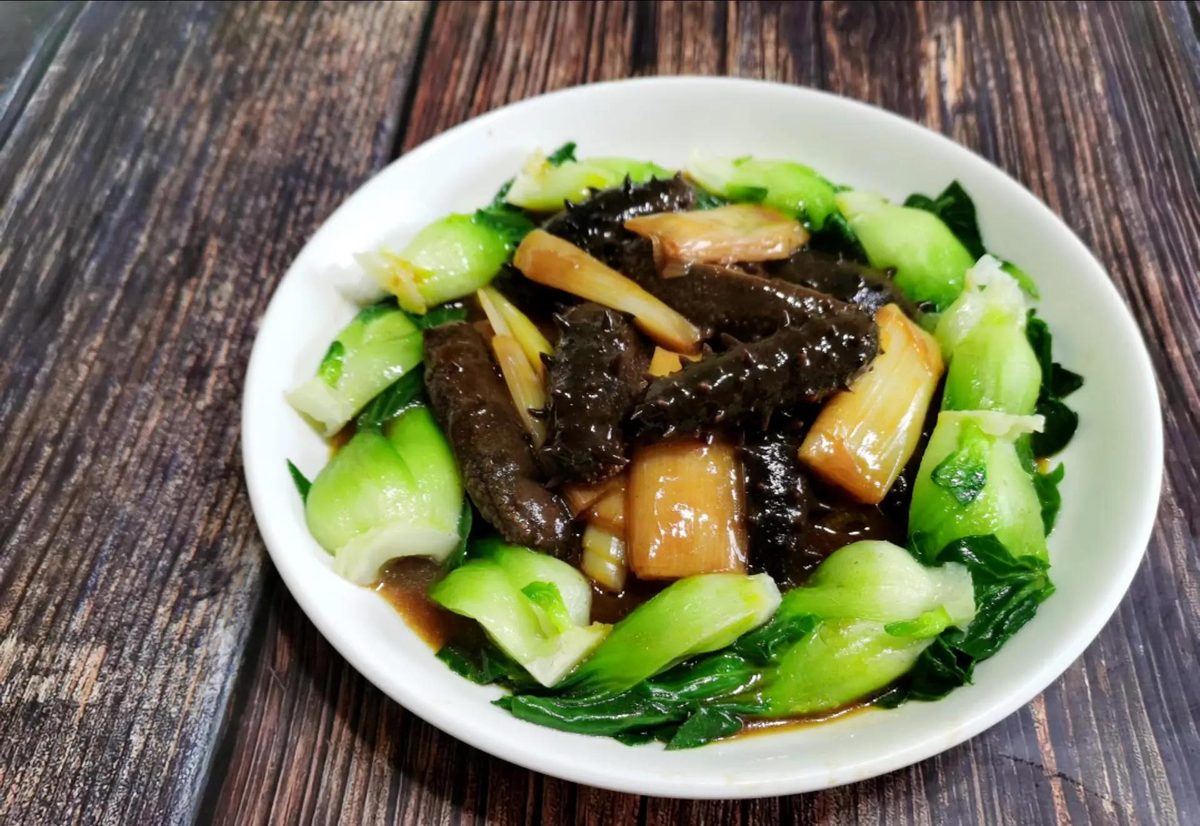
What he does with it is 葱烧海参 (cōng shāo hǎishēn), braised sea cucumber — the dish Shandong cuisine sends out when it wants you to understand that you are a guest.
I met it late. I was twelve, at a wedding banquet in Shanghai, twenty-odd dishes deep and completely full, when something arrived in a small white bowl that I did not recognize. It was dark, slippery, and shaped like nothing I had a word for. My uncle leaned over and said: eat that one. That's the expensive one. I chewed. It had no taste I could name. I assumed he was being polite about a bad dish.
It took me twenty years to get the joke, which is that he was right, and the dish still has no taste. Making it taste like something is the entire job.
The ingredient that tastes of nothing
海参 (hǎishēn) means "sea ginseng," which tells you more than the English name does. "Sea cucumber" is a description of the shape by somebody who had clearly never eaten one. A sea cucumber is a marine animal that spends its life on the sea floor eating sediment. The good ones are thick, spiny, and, once rehydrated, about ninety percent water.
It tastes of the sea the way a sponge tastes of the ocean. What it has instead is texture — bouncy, gelatinous, faintly resistant, the quality Chinese cooking calls 口感 (kǒu gǎn). It gives your teeth something to do for three seconds. That is the product.
Everything else on the plate exists to give it a flavor it cannot produce. The scallion oil handles the top note. A chicken-and-pork stock handles the bottom. Soy sauce, sugar, Shaoxing wine, and a spoon of starch slurry so the sauce clings instead of pooling. There is no sea cucumber flavor anywhere in this dish. There is only the flavor you built around it.
Four days before you start
Nobody braises a fresh sea cucumber. They braise a dried one, and the dried one is not ready for four days.
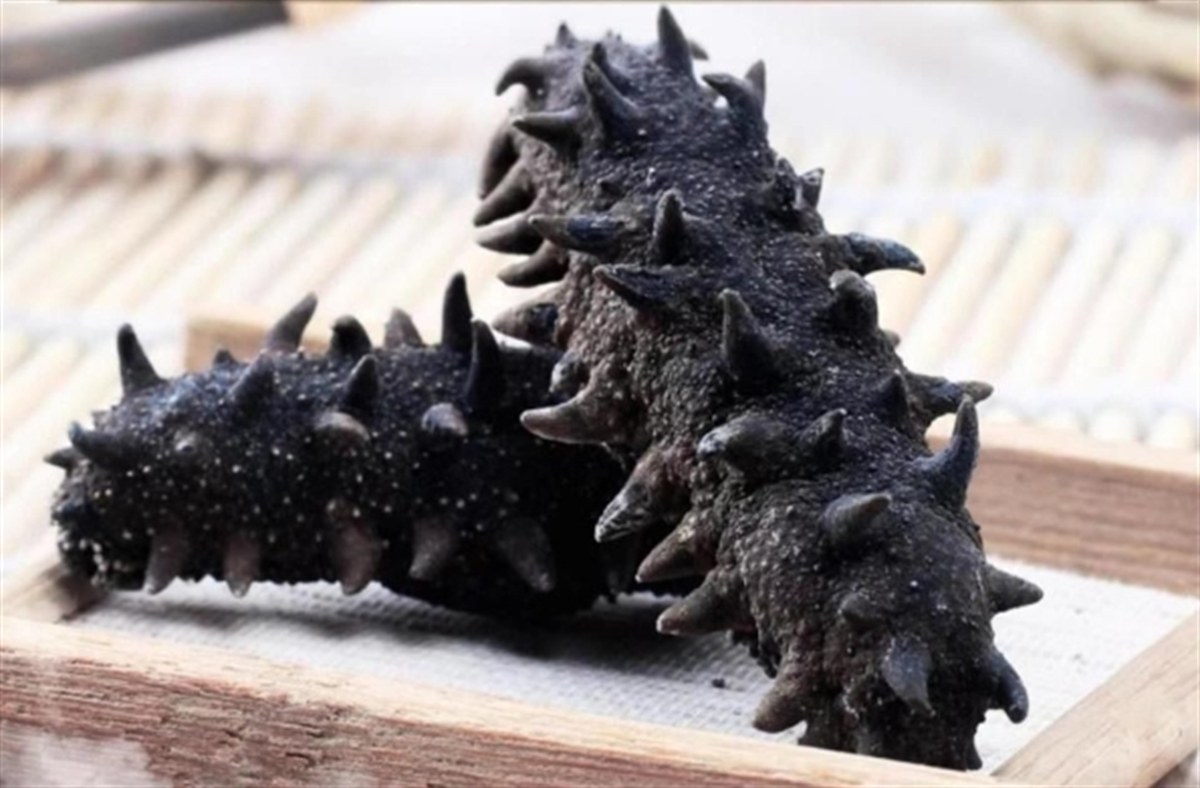
A dried sea cucumber looks like a strip of black shoe leather that has been through a war. You soak it in cold water, change the water twice a day, simmer it, let it cool in its own water, soak again, simmer again. Rush it — boil it hard to save a day — and the outside turns to jelly while the middle stays hard as a knuckle. Overdo it and the whole thing slumps into a gel no sauce can rescue. There is no thermometer for this. Only a look and a feel, which you learn by ruining a few hundred yuan of seafood.
Wang Yijun (王义均), the old master at Fengzeyuan, the Beijing restaurant that built its name on Shandong cooking, is known in the trade simply as the Sea Cucumber King. That is the shape of the career: one dish, one man, decades on it. Not because sea cucumber is glamorous, but because it is unforgiving. The rehydrated thing gets one chance to come out right.
What gets served instead
Hai qiezi, the "sea eggplant." A cheap cousin of the real thing, sold to people who don't look closely. It is hollow, it squeaks against your teeth, and it has none of the soft yield — nuò, 糯 — that defines a good sea cucumber. The tell is in your hand: the spines are soft and the thing weighs almost nothing. It costs a fraction of the price and tastes like it.
The over-plumped ones. Soaked in lye or pumped with water until they bounce like a foam mattress. They arrive enormous and they taste of the water they were inflated with. Size is not quality. A good one is dense, and slightly heavier than it looks.
The glue sauce. The most common failure, and the one that makes me put down my chopsticks. The cook thickens the sauce into a paste, so it coats your lips instead of the sea cucumber and buries the texture you paid for. The sauce should cling. If your chopsticks come away trailing a string, someone was covering for a poor ingredient.
Ready-to-eat frozen sea cucumber. Sold as convenience. It has already given up. It tastes like the inside of a refrigerator.
And one more, the one you can see from across the table: a dish with no real scallion in it. If the scallion segments are pale, raw-looking afterthoughts, nobody spent forty minutes on the oil. That is a shortcut with a visible signature.
The order of things
Eat it hot, and eat it as soon as it reaches you, before the table's conversation pulls you away. This dish dies at room temperature. The sauce tightens, the texture stiffens, the smell goes. At a banquet it arrives near the end, which is the wrong moment for it, but nobody argues with the order of a banquet.
Chopsticks for the sea cucumber, a spoon for the sauce. First bite plain, to feel the thing itself. Second bite over rice, one sea cucumber per spoonful, so the sauce has somewhere to go. Then eat the scallion — soft, dark, sweet with wine, and better than half the dishes it is sitting next to. That is the dividend on the forty minutes.
The last time I ate this was at a banquet in Shanghai, and I watched a table of people I have known my whole life do the same thing at the same second: pick up the scallion. Nobody had to be told. Some knowledge gets into a family without anybody saying it out loud.
Recipe coming soon — and this one genuinely needs it. Rehydrating a dried sea cucumber across four days, and pulling the scallion oil off the heat at the exact moment before it turns bitter, are the two decisions that decide whether the dish works at all. Both deserve their own post.
💬 Comments