Da Pan Ji: The Noodles Go In Last
Editor’s Note: This is the kitchen companion to Big-Plate Chicken: The Dish That Won't Fit on Your Table. Quantities, temperatures and the failure points are below. Read the technique once before you shop.
Why the Noodles Go In Last
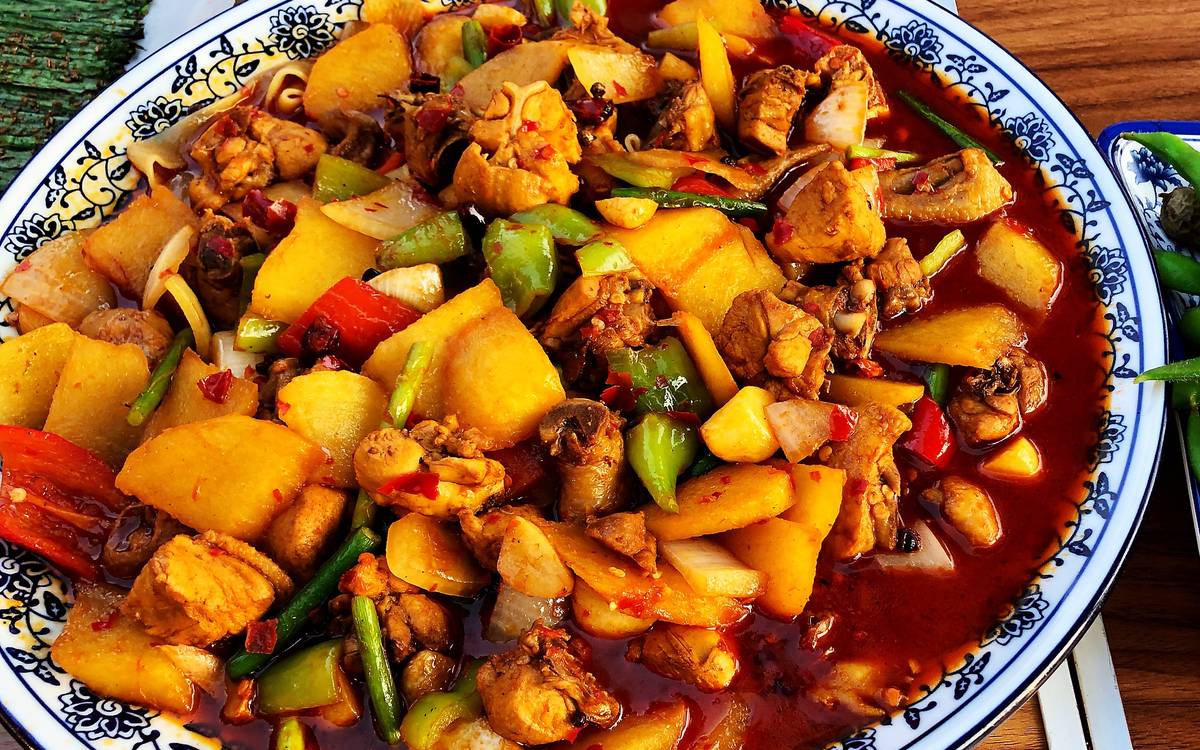
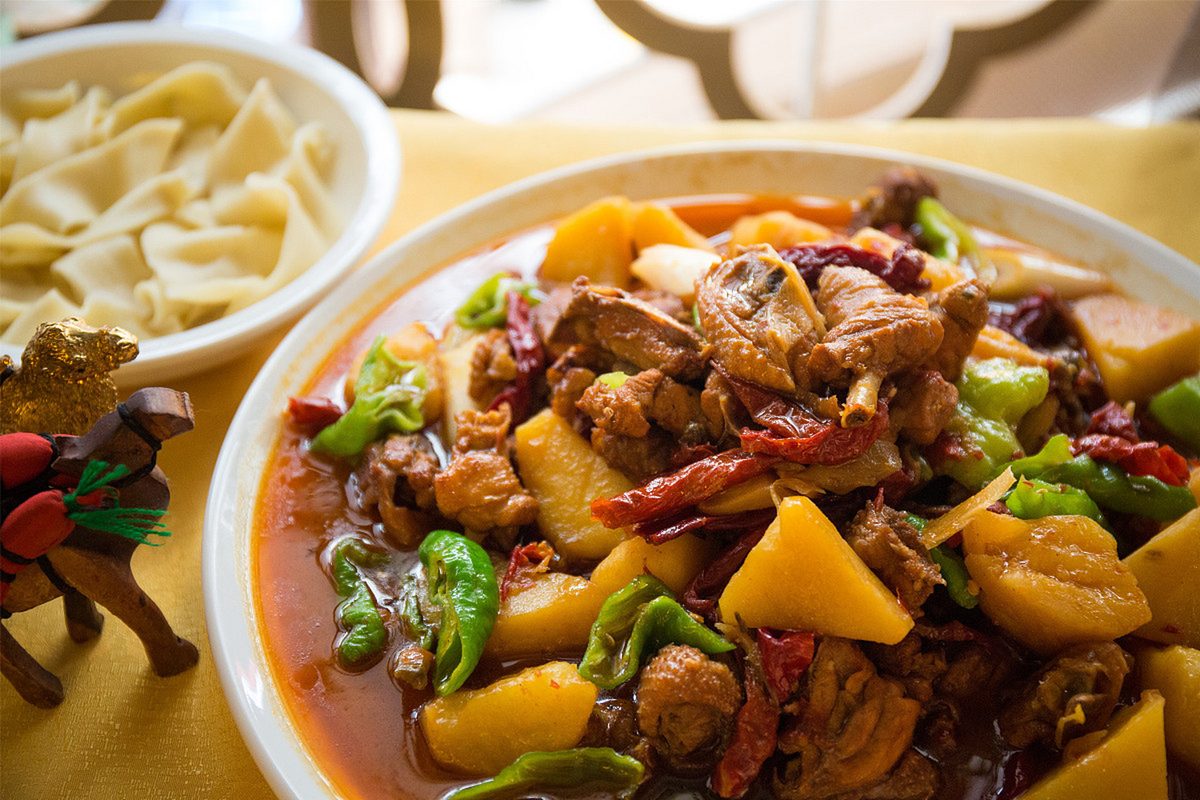
Da pan ji translates as “big plate chicken,” and the name is literal. In Urumqi it arrives on a platter wide enough that four people eat from it at once, chicken and potatoes in the middle and a bed of wide belt noodles underneath. The plate is both serving vessel and shared table, which is why the dish is eaten family-style rather than portioned into bowls.
The chicken is chopped bone-in, through the bone, into 4cm pieces. Bone conducts heat to the centre of each piece and gives up collagen to the braise, and a 1.5kg bird seasons the liquid as it cooks.
Colour comes from 40g of rock sugar melted in oil until it foams and turns the shade of dark honey, then the chicken is turned in it until every piece is lacquered. The sugar caramelises on the surface of the meat before any liquid goes in; skip it and the dish looks pale and tastes flat, however much dark soy you add.
The aromatics are specific: 3 tbsp of Pixian doubanjiang, 20g ginger, 5 garlic cloves, 2 star anise, a cassia stick and 6 dried chillies. The bean paste must be fried in the oil for 30 seconds before the liquid goes in. Why this matters: doubanjiang carries both the red colour and the fermented depth of the sauce, and it releases those into oil, not water.
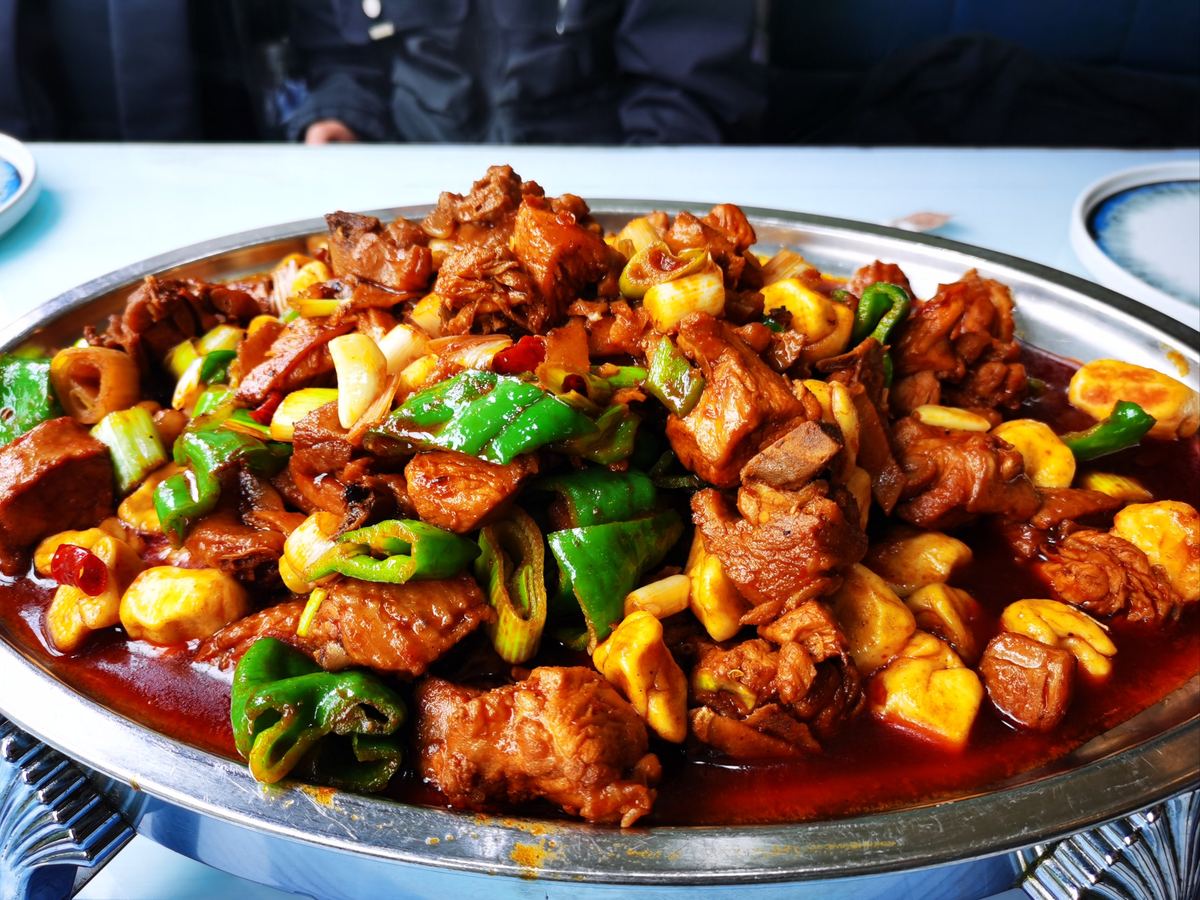
Three potatoes, cut into wedges, go in 15 minutes before the end. Why this matters: fifteen minutes cooks them through while they still hold an edge; earlier and the starch floods the sauce and turns it to paste, later and the potato is raw at the centre.
Then the noodles, cooked in a separate pot and laid on the plate first, with the chicken spooned over at the table. Noodles left in the sauce for 20 minutes drink it and swell into a paste. Five hundred millilitres of water or beer, a lid, and 30 minutes at a bare simmer is the whole braise. Keep the heat low enough that the surface trembles rather than boils, or the edges shred before the centre is tender.
Ingredients
For the chicken
- 1.5kg chicken, bone-in, chopped into 4cm pieces
- 40g rock sugar
- 3 tbsp (45ml) neutral oil
- 3 tbsp (60g) Pixian doubanjiang, chopped fine
- 20g ginger, sliced 3mm thick
- 5 garlic cloves (15g), smashed
- 2 star anise
- 1 cassia stick (5g)
- 6 dried chillies (12g), snipped
- 2 tbsp (30ml) light soy sauce
- 1 tbsp (15ml) Shaoxing wine
For the braise
- 500ml water or lager beer
- 3 potatoes (600g), cut into 4cm wedges
- 2 green peppers (200g), cut into 3cm pieces
- 1 onion (150g), cut into wedges
For the noodles
- 300g fresh wide belt noodles, or 250g plain flour plus 130ml water
- 1 tsp (5g) fine salt, for the noodle water
- 1 tbsp (15ml) chilli oil, to finish
Substitution notes: Without a whole bird, use 1.2kg of bone-in legs and thighs, chopped through the bone by your butcher. An ordinary chilli bean paste can stand in for Pixian doubanjiang at the same quantity, though it is saltier, so cut the light soy to 1 tbsp.
No fresh belt noodles: 300g of dried wide wheat noodles cooked a minute short of the packet time, or 300g of fresh udon. To make the dough, 250g plain flour and 130ml water with a pinch of salt, rested 30 minutes, pulls into two generous portions.
Prep: Twenty-Five Minutes, Including the Chopping
1. Chop and rinse the chicken (10 minutes)
Have the bird chopped through the bone into 4cm pieces, by your butcher or with a heavy cleaver and one firm strike per cut. Rinse in cold water for two minutes, until it runs clear, then drain and pat dry. Blood left on the surface will scum the braise and dull the colour.
2. Cut the potatoes and soak them (10 minutes)
Peel and cut each potato into wedges about 4cm long and 2cm thick at the back. Keep them in cold water so the surface starch does not turn them grey. Drain and dry just before they go in.
3. Measure the aromatics (3 minutes)
Chop the doubanjiang fine so it disperses instead of sitting in lumps. Slice the ginger, smash the garlic, snip the chillies into 2cm lengths and shake out most of the seeds.
4. Mix the noodle dough, if making it (2 minutes, then rest)
Stir the salt into the water, add the flour and mix to a shaggy dough. Knead five minutes until smooth, cover and rest 30 minutes while the chicken braises. Rest is what makes the dough pullable; without it the gluten fights back and the belts shrink.
Step by Step: Forty-Five Minutes, One Pot and One Extra
Step 1: Caramelise the sugar (3 minutes)
Put the 3 tbsp of oil in a wide heavy pot over medium heat, add the rock sugar and let it melt without stirring for the first minute, then stir slowly. It foams and turns dark honey about 90 seconds after it starts to colour. Pull the pot off the heat at that shade; rock sugar goes from amber to bitter in under ten seconds.
Step 2: Brown the chicken in the caramel (6 minutes)
With the pot back on medium heat, add the chicken in one layer, skin side down where you can. Turn each piece after two minutes, until lacquered dark red on all sides. Work in two batches if the pot is narrow; crowding steams the meat.
Step 3: Fry the paste and aromatics (90 seconds)
Push the chicken to the edge, add the doubanjiang to the oil in the centre and stir for 30 seconds, until it darkens and smells of fermented beans rather than raw chilli. Add the ginger, garlic, star anise, cassia and chillies for another 30 seconds. Splash in the Shaoxing, let it hiss off, then add the light soy.
Step 4: Braise for 30 minutes (30 minutes)
Pour in the 500ml of water or beer. It should come halfway up the chicken, not cover it. Boil, skim the grey foam that rises in the first two minutes, then lower the heat to a bare simmer, around 95°C, cover, and cook 30 minutes.
Step 5: Potatoes in with 15 minutes to go (15 minutes)
Add the drained wedges, press them under the liquid, cover and cook 15 minutes. Test with a knife at 12 minutes: it should slide in with slight resistance at the centre. If the sauce looks thin when the lid comes off, reduce it uncovered.
Step 6: Peppers, then the noodles (6 minutes)
Stir in the green pepper and onion and cook uncovered for 3 minutes, until the raw edge goes and the pepper deepens in colour. In a separate pot, bring 2 litres of water to a rolling boil at 100°C with the 1 tsp of salt and cook the belt noodles 2 to 3 minutes, until they float and are just tender. Drain and lay them across the bottom of a wide deep plate. Spoon the chicken and potatoes over, sauce and all, drizzle with chilli oil and take it to the table.
Key Pitfalls
The chicken was tough and chewy after 45 minutes. You used an older boiling hen, which needs 90 minutes or more, or the pot boiled hard instead of simmering. A young bird at a bare simmer is tender in 30 minutes; an old one will not be. Ask for a young chicken and keep the lid on.
The sauce tasted bitter and the colour was almost black. The rock sugar went past caramel and began to burn, which takes seconds. Melt it over medium heat, pull the pot off the moment it foams to dark honey, and add the chicken at once. If it has already blackened, start again; nothing removes that bitterness.
The potatoes dissolved and the sauce turned to paste. They went in too early, or they were a floury baking variety. Add them 15 minutes before the end, use waxy potatoes, cut large wedges, and keep the simmer gentle.
The noodles turned to mush under the chicken. They sat in the sauce, or were cooked past tender before assembly. Boil them separately, drain well, and lay them on the plate no more than two minutes before serving.
The braise was thin and tasted of water. Too much liquid went in, or the pot stayed covered so nothing reduced. Use 500ml, simmer with the lid on, then take it off for the last three minutes.
The dish was greasy and the chilli paste tasted raw. The doubanjiang went into liquid instead of oil, or the oil was not hot enough for the chicken. Fry the paste in the oil for 30 seconds until it darkens and smells toasted, and brown the chicken in batches so the fat renders instead of pooling.
The chicken was still pink at the bone. The pieces were larger than 4cm, or they were stacked so heat could not circulate. Chop to a consistent 4cm, brown in one layer, and simmer covered for the full 30 minutes before the potatoes go in. A piece at the bone should show no red.
Serving Suggestions
Bring the plate to the table and let people serve themselves, digging for chicken and potatoes and pulling noodles up from underneath. That is how it is eaten in Xinjiang, and it is the practical reason for the wide plate: the noodles need room to lie flat.
Serve cold beer, or the milky black tea you are more likely to be offered in Urumqi. Leftovers keep two days; reheat gently and cook fresh noodles.
This is the companion recipe to Big-Plate Chicken: The Dish That Won't Fit on Your Table. Read the story, then cook the dish.
💬 Comments