Biang Biang Noodles: Rest the Dough, Then Slap It
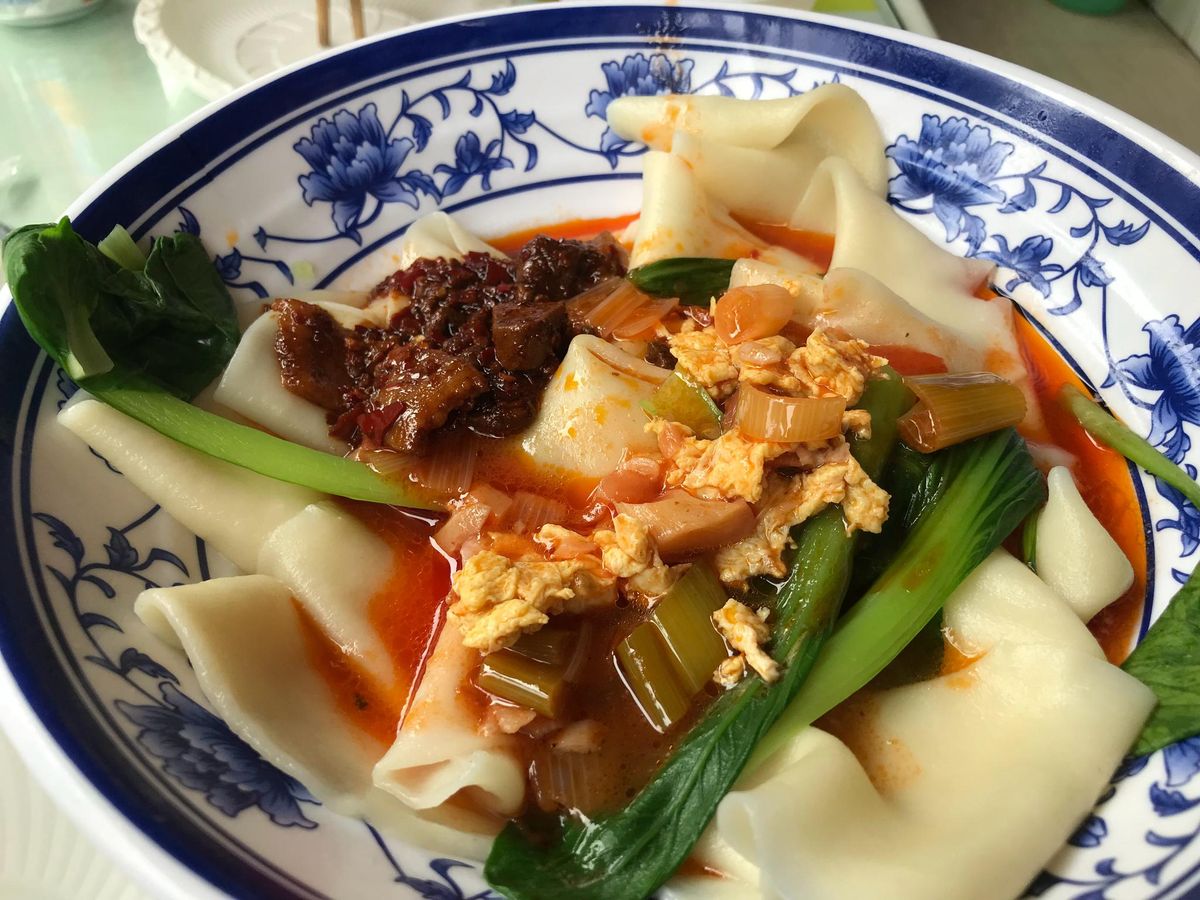
Editor’s Note: This is the kitchen companion to Biang Biang Noodles: The Slap You Can Hear Down the Lane. Quantities, temperatures and the failure points are below. Read the technique once before you shop.
Why the Dough Needs Both Rests
Biang biang mian are named for the sound the dough makes hitting the bench: biang, a flat crack, twice, and the ribbon has grown another 30cm. The slap is not theatre. A belt 1.5 metres long and 4cm wide cannot be rolled that thin, because rolling compresses the gluten and the noodle snaps back. It has to be thrown, and the throw only works if the gluten has had two chances to relax.
The mix is 300g of flour, 160ml of water, and 4g of salt, about 53 percent hydration, wetter than a You Po Mian dough because the belt is thin and must survive the bench. Five minutes of kneading is enough at this hydration. More only tightens the gluten you are about to relax.
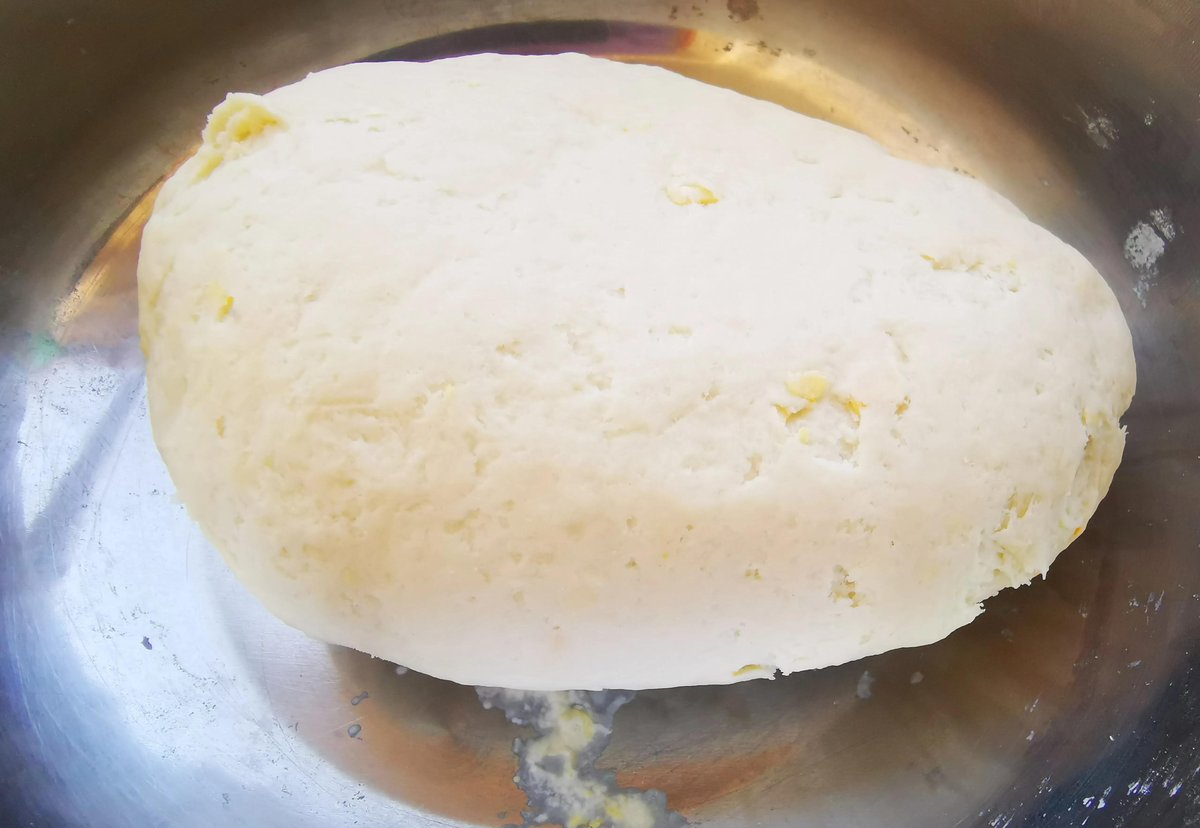
The first rest is 40 minutes, covered, and it is the long one. The flour finishes hydrating and the bonds the kneading aligned begin to slide past each other. Skip it and the dough tears at the first pull. Why this matters: those 40 minutes are the difference between a ribbon and a ragged strip.
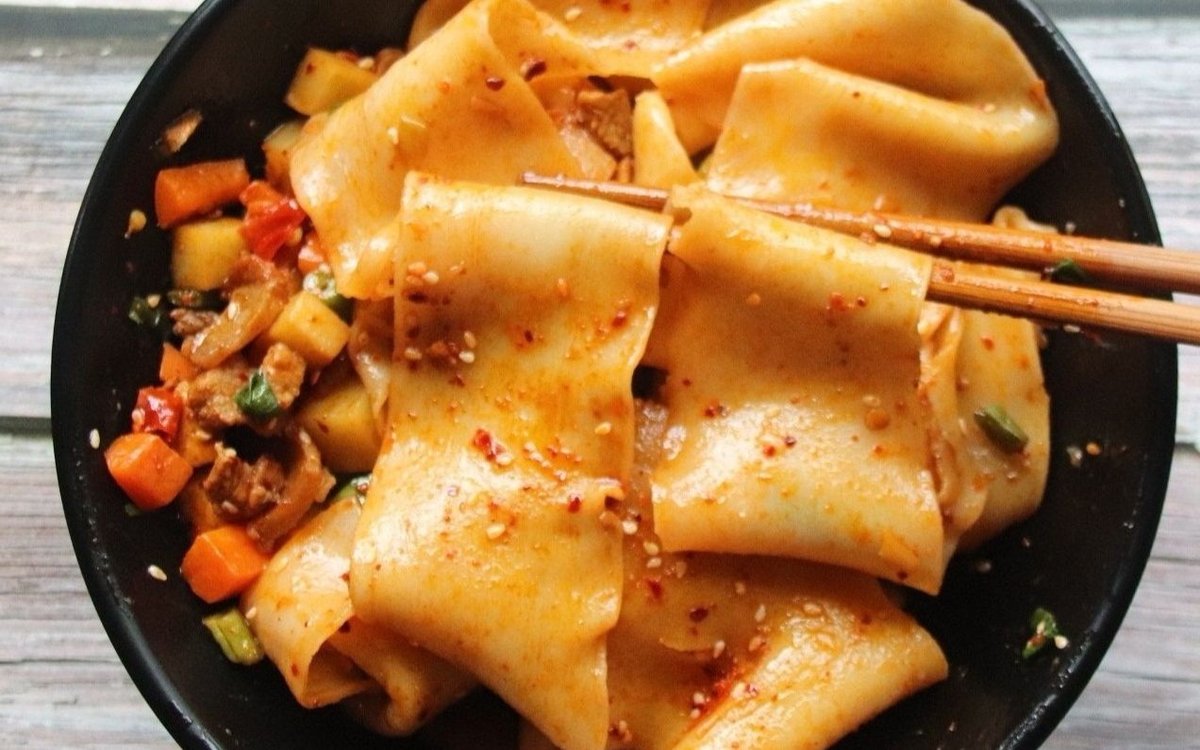
The second rest, 30 minutes after the dough is cut into 6 oiled pieces, does a different job. Rolling re-tensions the surface, and each piece needs its own half hour. The oil is mechanical as well as flavouring: it lets the dough slide against itself without flour. Flour at this stage is the commonest reason a belt tears, because the dry skin cracks when stretched and the tear starts at a crack.
Ingredients
For the dough
- 300g plain flour or bread flour (10.5-12% protein)
- 160ml water, at room temperature
- 4g fine salt
- 30ml rapeseed oil, for oiling the pieces
For the topping, per bowl
- 2 tbsp (16g) coarse chilli flakes
- 2 cloves garlic (10g), minced
- 2 spring onions (30g), greens sliced thin
- 2 tbsp (30ml) Chinkiang black vinegar
- 1 tbsp (15ml) light soy sauce
- 150g bok choy, quartered lengthwise
- 70ml rapeseed oil, for the pour
- 1 tsp (4g) fine salt, for the noodle water
- 1 tsp (2g) ground Sichuan pepper, optional
- 1 tsp (5ml) toasted sesame oil, optional
Substitution notes: Plain flour is traditional and gives a softer belt; bread flour gives more chew but resists the slap, so rest each oiled piece 40 minutes instead of 30 and keep the water at 160ml. The dough should feel firm and slightly tacky, never soft.
Balsamic can stand in for Chinkiang vinegar but is sweeter and thicker, so use 1 tbsp rather than 2. Bok choy is classic; choy sum, spinach, or blanched bean sprouts all appear in Shaanxi shops, and any of them should be shaken dry before they go on the noodles.
Prep: Knead Once, Rest Twice, Oil Everything
1. Mix and knead (5 minutes)
Dissolve the 4g of salt in the 160ml of water. Add it to the flour in three goes, stirring with your fingers until no dry patches remain. Turn out and knead 5 minutes, no longer. The dough should be smooth, firm, and barely tacky.
2. First rest, covered (40 minutes)
Shape into a ball, put it in a bowl, cover with a plate, and leave 40 minutes. Do not shortcut this in a warm spot. Heat makes the surface sweat and slacken while the centre stays tight.
3. Divide into 6 and oil each piece (6 minutes)
Cut the ball into 6 pieces, about 77g each. Roll each into an 8cm cylinder, stand it on end, and press into a fat disc. Turn each in the 30ml of oil until fully coated, set them 2cm apart in the dish, and cover.
4. Second rest (30 minutes)
Thirty minutes minimum, 40 if the kitchen is cool. A piece is ready when a thumb leaves a dent that stays. If it bounces back, wait another 10.
5. Set up the bench and the pot
You need a bare, dry metre of bench, an oiled tray for finished noodles, and a pot of at least 3 litres at a rolling boil with the 1 tsp of salt. Warm the bowls and lay out the toppings first. Once you start, each noodle takes 90 seconds.
Step by Step: Press, Pull, Slap, Tear
Step 1: Press the disc flat (30 seconds)
Press one oiled disc with your palm into a flat tongue about 18cm long, 8cm wide, and 5mm thick. Work on the bare bench, not on flour and not on a board, so the dough grips and stretches instead of sliding.
Step 2: Pull the ends (20 seconds)
Hold the tongue at both ends, thumbs underneath, and lift so gravity takes the middle. Move your hands apart slowly, then bounce once to thin the centre. Aim for a 40cm sheet before the slapping starts. If it resists, put it down for a minute.
Step 3: Slap it twice (30 seconds)
Lift the sheet by both ends, swing it up, and slap the centre flat on the bench. The impact stretches the middle and you hear the flat crack the noodle is named after. Slap again. Two firm slaps take it to about 1.5 metres and the centre to 2mm. A fourth and the middle goes too thin and splits in the pot. Why this matters: the slap stretches the centre evenly, which a rolling pin cannot.
Step 4: Tear down the middle (15 seconds)
Lay the sheet along the bench, pinch the middle at one end, and tear lengthwise to the other end in one steady pull. You get two long ribbons joined at both ends, a loop that makes the noodle look like a belt rather than a strap.
Step 5: Boil for 90 seconds
Lower the loop into the rolling water, holding one end for a second so it does not splash, then let go and stir once to separate the strands. Ninety seconds from the moment the water returns to a boil. It is done when opaque and sliding against itself, not when it floats, which happens earlier.
Step 6: Blanch the greens and build the bowl
In the last 30 seconds drop the 150g of bok choy into the same pot, then lift noodles and greens out together, shaking off the water. Put them in a warm bowl. Mound the chilli flakes, garlic, spring onion, and optional Sichuan pepper in the centre, and pour the vinegar and soy around the rim.
Step 7: Pour the oil at 200°C (20 seconds)
Heat 70ml of rapeseed oil until it just smokes, 200°C on a thermometer. Off the heat, pour in three goes over the chilli and garlic, waiting 5 seconds between. The first blooms the chilli, the second cooks the garlic, the third carries the oil into the noodles.
Step 8: Toss and eat
Fold from the bottom so the vinegar and soy come up through the belt. Toss 20 seconds and get it on the table. A belt this wide cools fast, and cold biang biang is chewy in the wrong way.
Key Pitfalls
The dough shrank back the moment you let go of the ends. It has had one rest, or it was re-kneaded after resting. Both rests are load-bearing. Cover the piece for 10 more minutes, then pull more slowly and let the weight of the dough stretch it rather than your arms.
The sheet stuck to the bench and tore where it touched. You floured the bench, or the piece was not oiled all over. Flour makes a dry skin that cracks when stretched, and the tear starts there. Wipe the bench and oil the piece again.
The belt split down the middle in the pot. Too many slaps left the centre under 2mm, or the tear was made with fingernails rather than a pinch. Two slaps, then tear slowly and let the dough part instead of cutting it.
The noodles gummed together in the water. The pot was too small or the water was not at a rolling boil. Use 3 litres for 300g of dough, salt it, and stir once so the surfaces separate before the starch sets.
The chilli tasted burnt and the oil smelled acrid. The oil passed 210°C, or the flakes went into the pan instead of the bowl. Heat the oil alone, take the pan off the flame, then pour onto the chilli in the bowl. Bitterness does not wash out.
The bowl was bland under all that chilli oil. The water was under-salted, or the vinegar went on top of the chilli and sank. Use 1 tsp of salt per 3 litres and pour the vinegar and soy around the rim.
The noodles tasted of raw flour. Surface flour was carried into the pot from a bench dusted earlier. Brush the bench before slapping and use oil only. The water should be cloudy, not milky.
Serving Suggestions
Serve in deep bowls, one loop per person, with the chilli oil still hissing. In Xi’an the accompaniment is a bowl of the starchy noodle water, drunk between bites, and raw garlic. Cold sliced cucumber with salt and vinegar is the other plate.
The noodles are long, so use chopsticks, lift high, bite. Drink cold beer or hot tea. Oiled discs freeze for a month; thaw overnight in the fridge and rest 30 minutes before slapping. Cooked noodles do not keep.
The character is the other thing everyone knows, and nobody agrees on it. Most printed versions have 58 strokes; shops show 56, 57, and 62, because it was invented locally rather than standardised, and each region writes the rhyme differently. It entered Unicode in 2020, which settled the encoding and not the count.
This is the companion recipe to Biang Biang Noodles: The Slap You Can Hear Down the Lane. Read the story, then cook the dish.
💬 Comments