Beijing Mutton Hot Pot: Charcoal, Clear Water, and the Best Lamb in China
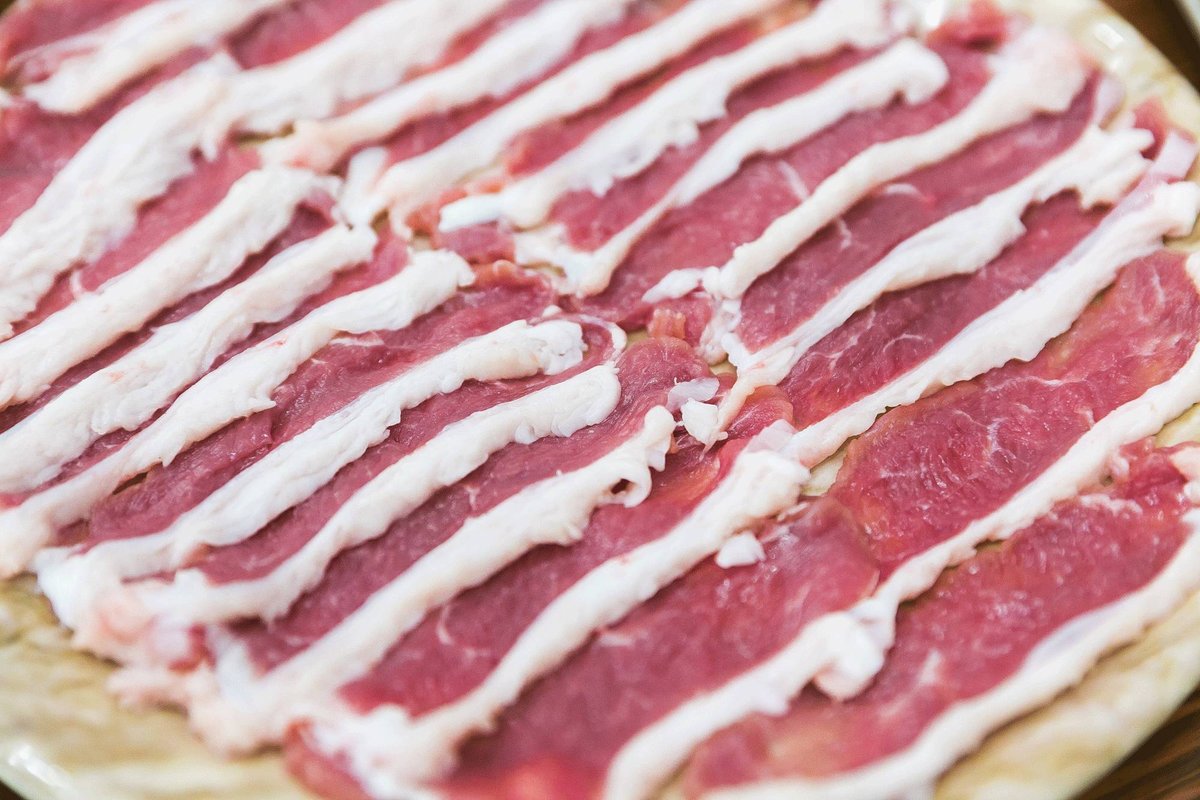
You push through two layers of plastic sheeting into a room that smells of charcoal and wet wool, and for a second you can't see anything, because every surface is steaming. On each table stands a copper pot shaped like a small lighthouse: a wide ring of boiling water, a chimney in the middle packed with glowing coal, and a brass damper on top that the waiter tilts to control the fire. Nobody hands you a menu. A plate of lamb arrives, slices fanned out like playing cards, thin enough that you can read the pattern of the plate through them.
The table goes quiet. Then you hear it — shuàn, the sound of raw meat meeting barely-boiled water, half a second of hiss and then nothing. Eight seconds. Twelve at the outside. You lift the slice out, it has gone from deep red to the colour of a rain cloud, and it vanishes into a bowl of sesame paste. Multiply that by forty slices, an hour, six people, and you have the sound of a Beijing winter.
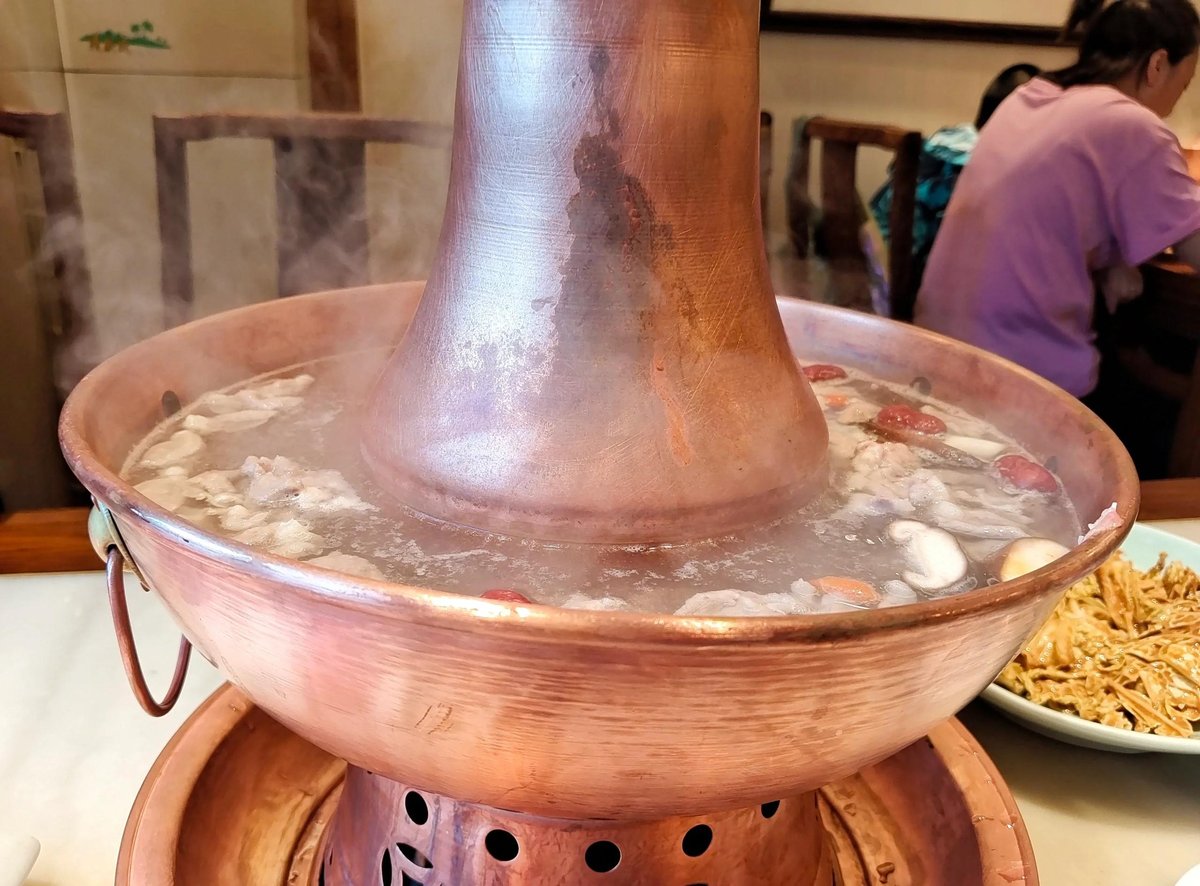
This is Beijing Mutton Hot Pot (铜锅涮肉, tóng guō shuàn ròu), and it is the strangest famous dish in China: a meal whose cooking medium is water with almost nothing in it. Three segments of scallion, two coins of ginger, a few goji berries if the kitchen is feeling generous. That's the broth. Everything the dish has to say happens after the meat leaves the pot.
Which makes it the exact opposite of the hot pot most of the world knows. Chongqing's cauldron is a statement — beef tallow, three kinds of chili, Sichuan peppercorn, a surface you could skate on. You eat that one for the numbness and the noise, and the ingredients are almost beside the point. A Beijing copper pot argues that the ingredient is the point: that if your lamb is good enough, you don't need to hide it. The two cities have been having this argument politely for about a century and neither is winning. Shanghai keeps a version too — 热气羊肉, hot lamb, in the same clear-water pots — which suggests the northern logic travels better than either city admits.
It comes with imperial paperwork and street-level roots. The Qing court put 涮羊肉 on the table at Qianlong's 千叟宴 in 1796, a banquet for a thousand elders that reportedly ran 1,550 copper pots at once. The modern version was scaled up by a Hebei street vendor named Ding Deshan, who opened a porridge stall outside Dong'an Market in 1903 and grew it into Donglaishun, the name Beijing still uses as shorthand for the dish.
Then there is the technique, which is where most people fail. Shuàn (涮) does not mean cook. It means rinse, swish, blanch. You hold a slice in your chopsticks, dip it into the boiling ring, drag it back and forth twice, and pull it out while it still has opinions. Ten seconds for a paper-thin hand-cut slice. Leave it in any longer and you get grey rubber with the flavour cooked out into the water. The pot is not a stew. It's a hot rinse, and the lamb only passes through.
Which is why the meat has to be cut by hand. A serious shop slices 手切羊肉 (shǒu qiē yáng ròu) to about a millimetre, following the grain so that every slice carries a rim of white fat that renders the second it touches water. 上脑, off the shoulder, dissolves. 小三岔 and 黄瓜条 give you a little more chew and a stronger lamb. Order two cuts and compare them side by side — that's the whole evening, honestly. Everything else is garnish.
The sauce is the actual dish. Sesame paste (麻酱, má jiàng) loosened with water a spoonful at a time until it ribbons off the chopsticks, then 韭菜花 — chive-blossom paste, salty and faintly sharp — and 酱豆腐, fermented bean curd, mashed in with a little of its red brine. Sesame oil, cilantro, scallion, chili oil if you insist. Too thick and it coats like cement; too thin and it slides off the meat before it gets to your mouth. Get it right and it is the reason people crave this in July.
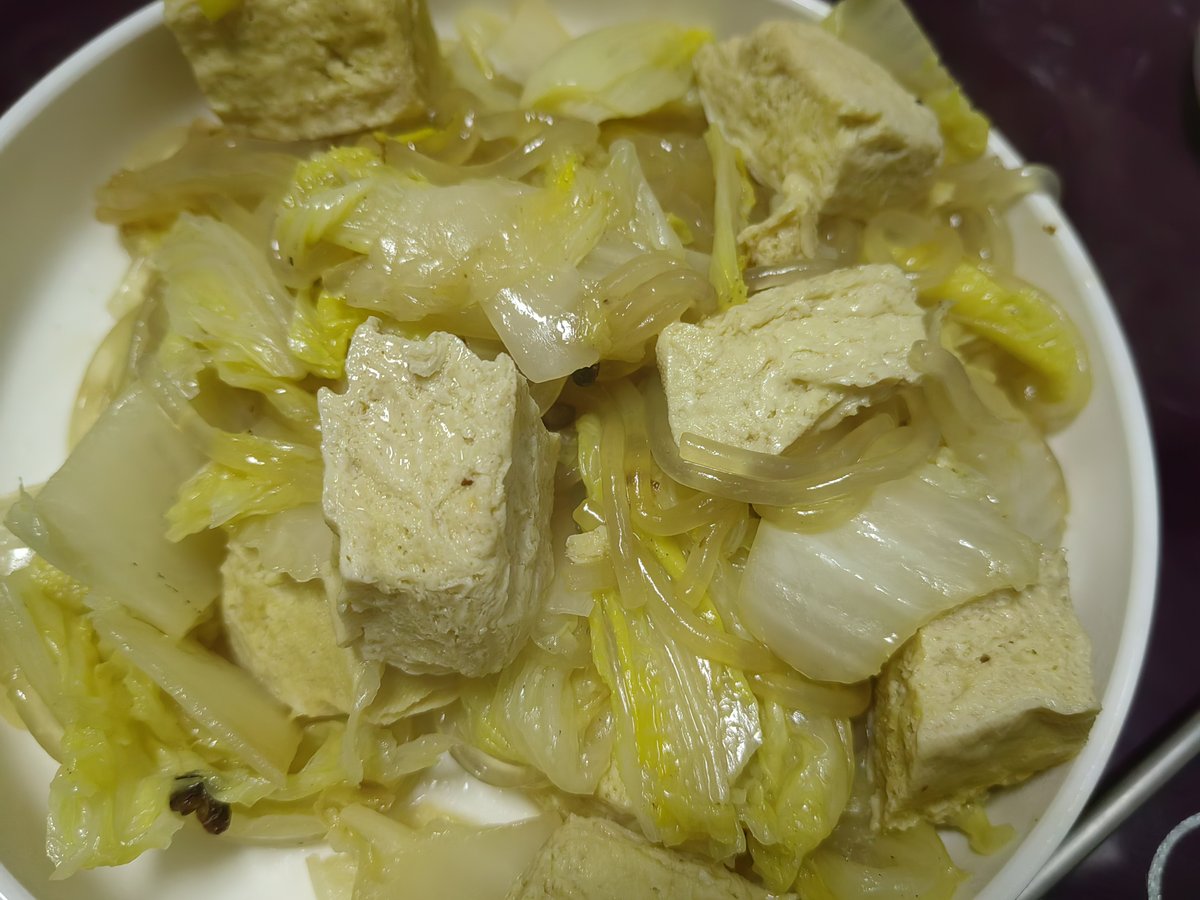
Eat in order. Lamb first, while the water is still clean and sweet. Then 百叶, the leaf tripe, seven seconds and a sound like a deck of cards being cut. Then 冻豆腐, frozen tofu, which comes back from the freezer full of holes and drinks the lamb-flavoured water like a sponge. Cabbage and glass noodles last, then a sesame 烧饼 to wipe the bowl. Sweet pickled garlic (糖蒜) on the side, one clove per slice, until the plate is gone. Beijing drinks 二锅头 with this — the cheap stuff, small glasses, one round per plate of meat.
Now the enemies. The pink log: lamb rolled into a frozen cylinder and shaved on a machine, sold everywhere as "mutton roll." It thaws into wet paper, tastes of nothing in particular, and clouds the water four minutes in. The 鸳鸯锅, the half-and-half yin-yang partition, is a peace treaty for a fight that doesn't exist, and the spicy half makes everything taste the same. The bottle labelled "hot pot dipping sauce" — peanut butter, sugar and defeat. And the induction plate under a copper-coloured pot: no coal, no chimney, no smoke, no reason. The fire isn't decoration. It's what holds the ring at a rolling boil so that ten seconds actually means ten seconds.
The first time I ate this I was twenty-three, in Beijing for a week in January, and a cousin who had moved north for university did the ordering. I asked for soy sauce. She looked at me the way you look at someone asking for ketchup at a steakhouse, then spent ten minutes building me a bowl of 麻酱 like an apology she owed the family. I have never ordered soy sauce with hot pot again. I have also never had a bowl of sesame paste back home in Shanghai that tasted quite like hers, which is either a fact about the sauce or a fact about being twenty-three.
Near the end, when the lamb is gone, the water in the pot has become something else: a pale, lamb-sweet broth that nobody drinks, because it belongs to the cabbage and the tofu, which have been waiting all night for exactly this. So the last thing you taste is not meat and not sauce. It's the water that did all the work and never got credited. Somewhere around the fortieth slice the table goes quiet again. That's the review.
💬 Comments