Beggar's Chicken: Two Years Looking for One That Wasn't a Lie
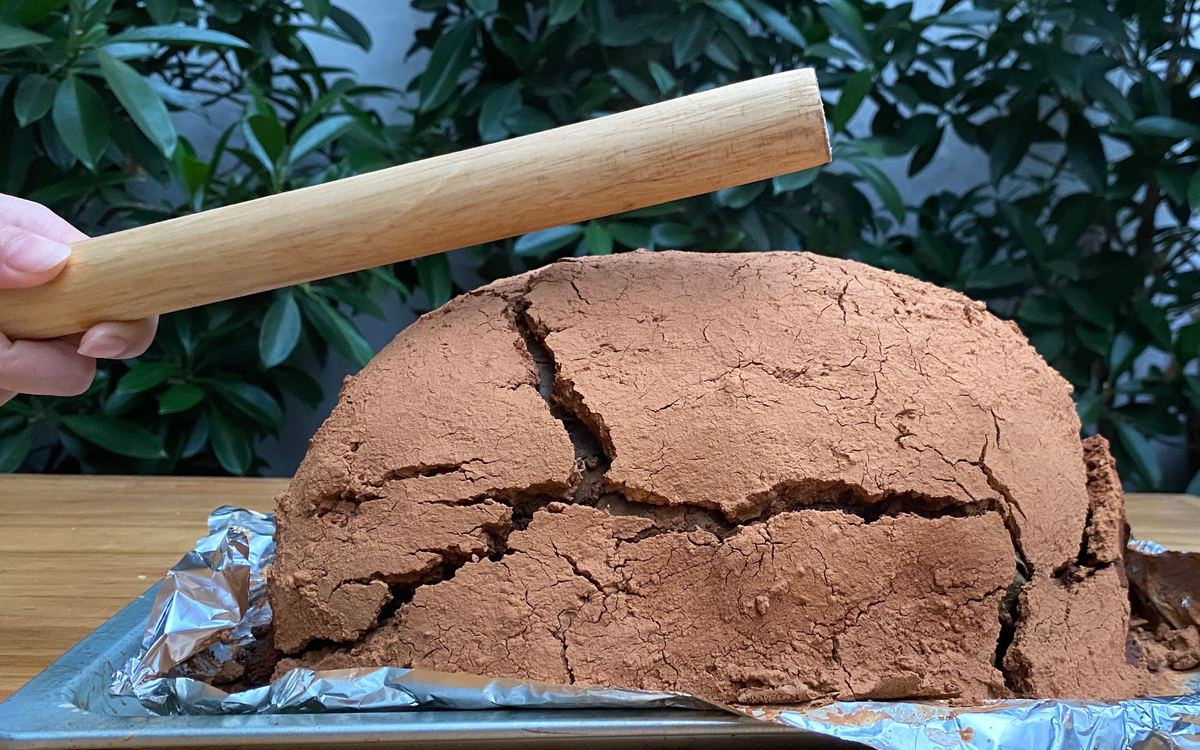
The first thing the waiter hands you is a mallet. Not chopsticks. Not a menu. A mallet.
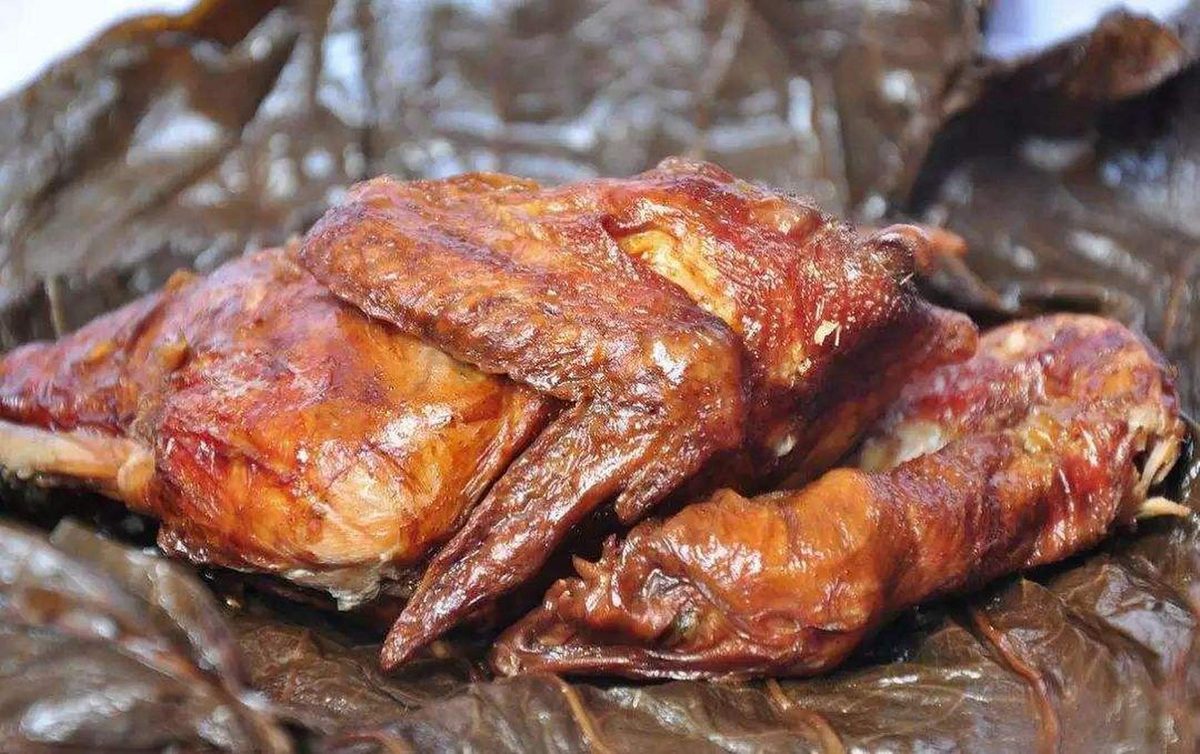
What lands on the table is a grey lump the size of a football, baked hard as a brick and dusted with ash. Three taps on the crown and it splits with the sound of a dropped dinner plate. Steam comes out first, then the smell: dried lotus leaf, sweet and grassy, the way a lake smells in August. Under the leaf there is a chicken, and when your chopsticks touch it the meat gives up on its own.
I had that chicken for the first time at nine, at a cousin's wedding in Changshu (常熟), and I remember two things about it. My uncle swinging the mallet like he was angry at the bird. And my grandmother, not looking up, saying: that is a beggar's chicken. Beggar's Chicken (叫花鸡, jiàohuā jī) comes from that town. For about five years after I moved back to Shanghai, almost everything I ordered under that name was a lie.
The test is the phone call
The fake version has a signature, and once you know it you can smell it from the pass. A chicken rubbed with five-spice, wrapped in aluminum foil, pushed into a convection oven, then served with a lotus leaf laid on top like a napkin. Foil holds heat and nothing else. No aroma leaves the bird and none perfumes the room, so what reaches your table is a roast chicken with a prop on it. The breast goes chalky. The skin tightens into something you have to saw.
Twice I got something worse. Once at a wedding banquet in Pudong, the "clay" turned out to be a salt crust — a real technique from Hakka cooking in Guangdong, well made, and not the dish I had ordered. They had wrapped it in lotus leaves and printed the name on the menu anyway. That is not fusion. That is a costume.
So I stopped ordering it and started asking questions. Two questions, and the second one is the whole test. How many hours? And do I need to call ahead? Any kitchen that can put one in front of you thirty minutes after you sit down is reheating something that was cooked this morning or last week. The kitchens that do it properly all say the same sentence: call us tomorrow, come Friday.
My cousin lives twenty minutes outside Changshu, so I asked her where the real ones were. She did what relatives do and made a phone call. "Friday," she said. "You order it when you book the table."
Nothing crispy happens in there
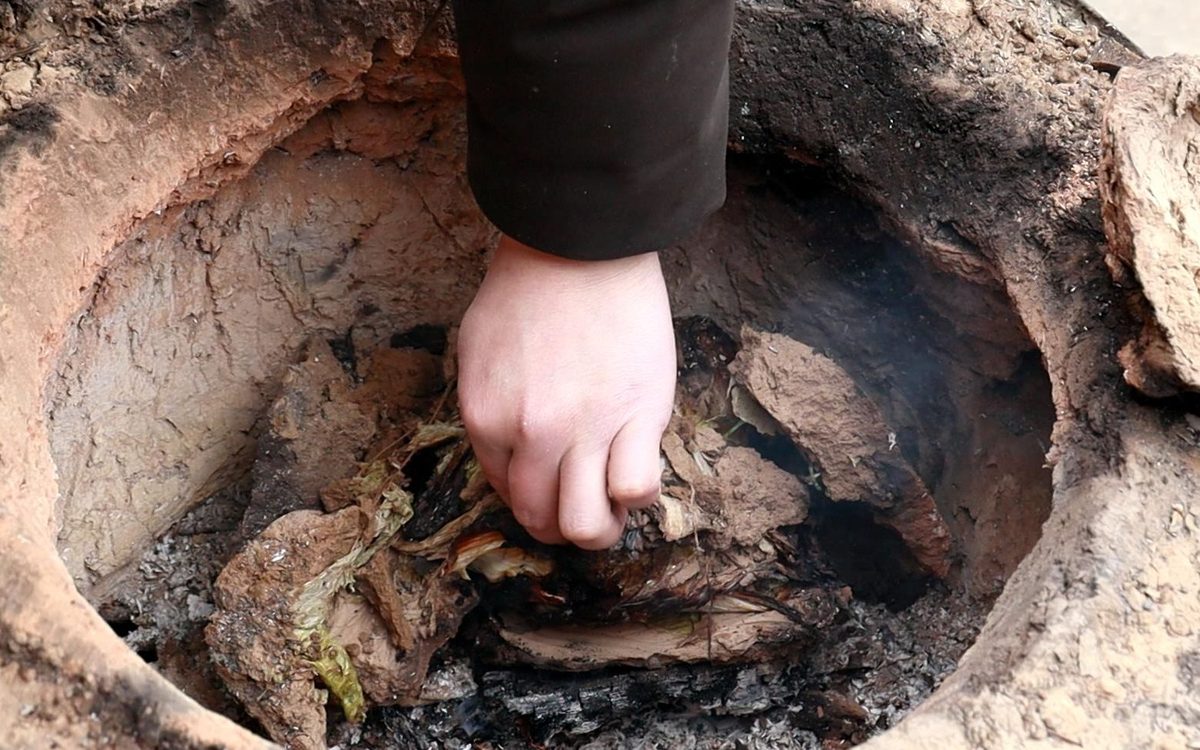
Here is what the real thing costs a kitchen. A whole free-range bird, a little over a kilogram, rubbed inside and out with Shaoxing wine, dark soy, ginger and a pinch of five-spice. Into the cavity goes a stuffing of pork, shiitake, ham and sometimes glutinous rice. Then two wraps: an outer layer of dried lotus leaf, an inner layer of fresh one. The dried leaf holds the aroma in; the fresh leaf is where the aroma comes from in the first place. Over that goes the clay — the kind sold for sealing wine jars, mixed with water and a handful of chopped straw so the shell does not split in the heat. Then three or four hours in a low oven, or buried in the ash of a wood fire.
That last part is why the meat tastes the way it does. This is not roasting. Inside a sealed clay shell the chicken's own moisture has nowhere to go, so it steams and braises in its own juice at the same time, at a temperature that never gets aggressive. The skin is never going to be crisp, which is why anyone promising you crispy beggar's chicken is selling you the foil version. Instead the skin turns silky, almost gelatinous, and the meat pulls apart in long strands that taste of lotus leaf first, smoke second, chicken third.
The story is short. A beggar in Changshu, a few hundred years back, stole a chicken and had no pot, no stove, nothing to cook it in. He packed it in river mud and threw it into his fire. It worked. The dish then got a name no banquet host wanted to say out loud, so it was quietly rebranded 富贵鸡 (fùguì jī) — "wealthy chicken." Same bird, better marketing.
Ask for it to be opened at your table. If the kitchen wants to crack it in the back and send out a plated bird, refuse. The first thirty seconds of steam is the best thing on the menu and it does not survive a trip through the swing door.
When the shell opens, wait a minute before you reach in. Peel the lotus leaves back carefully: there is a puddle of dark juice sitting in the fold, and that is your sauce. No gravy, no dip, no sauce dish on the side. Pull the meat with chopsticks — if you need a knife, someone overcooked it. Eat the stuffing with plain rice, because on its own it is too rich and rice is the only thing that can carry it. And order a vegetable, something plain and cold. You will want it halfway through.
Nobody orders this on a whim. It costs a phone call a day early, three hours of somebody else's afternoon, and a bird that was alive that morning. Then it costs you ten seconds with a mallet, and the mallet goes back to the kitchen when you are done. The dish already did the work, in the dark, sealed in mud. All you did was knock on the door.
💬 Comments