Ants Climbing a Tree: The Most Dishonest Name in Chinese Food
The menu said 蚂蚁上树. My friend read it twice, then looked up. "Ants climbing a tree," she said slowly. "They put actual ants in it?"
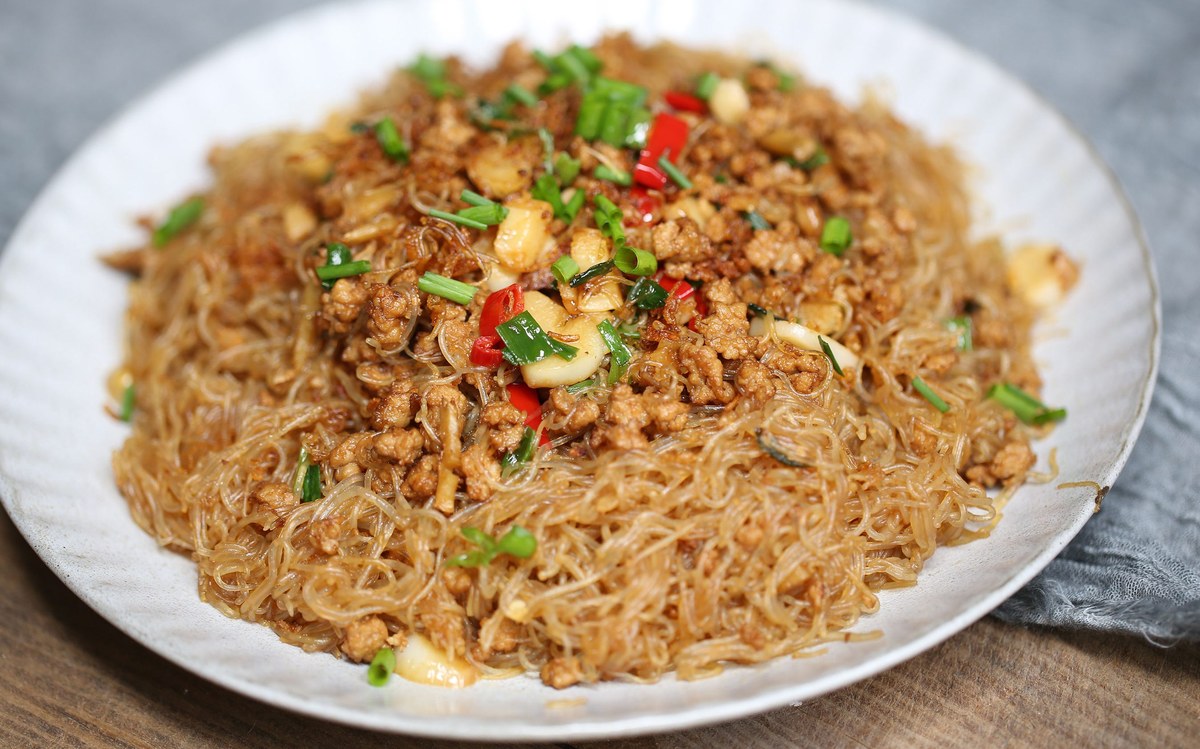
The waiter didn't laugh. He'd heard it before. He just tipped his head at the next table, where a plate had landed a minute earlier: a dark red tangle of noodles, glossy with oil, scallion ends scattered over the top. Nothing on it with legs.
Ants Climbing a Tree (蚂蚁上树, mǎyǐ shàng shù) has the most dishonest name in Chinese cooking, and the dishonesty is the whole charm. There are no ants. There is no tree. What arrives is a plate of glass noodles (粉丝, fěn sī) tossed with minced pork and fermented chili bean paste, cooked until nearly dry and slick with red oil. The "ants" are the little crumbles of pork. The "tree" is the noodle. Once you see it, you can't unsee it — the bits cling to the strands at every angle, climbing.
The legend, if you want one, goes back to a Yuan-dynasty play. A widow named Dou E, too poor to feed her toothless mother-in-law anything chewy, minced a scrap of pork, fried it hard, and let it catch on a nest of soft vermicelli. The old woman asked what the dish was called and Dou E, who had a flair for the dramatic, said the meat looked like ants climbing a tree. It probably didn't happen. Most of these stories were invented decades after the dish was already on tables. But it explains the name better than anything else does.
I learned to make it badly before I learned to make it well. Sophomore year at Fudan, my roommate was from Chongqing, and he kept a forbidden electric wok under his bed. The first time he cooked, the smoke detector went off and we spent ten minutes waving a notebook at the ceiling. Then he put a plate in front of me and said, "Eat. Don't ask what's in it."
What was in it: half a pack of dried vermicelli, a fistful of minced pork, a spoon of doubanjiang (豆瓣酱, dòubàn jiàng), ginger, garlic, scallion, a pinch of sugar. That's the entire dish. Four ingredients if you don't count the aromatics, six minutes if the wok is already hot.
The trick he shouted at me about — actually shouted, because the range hood was useless — was the noodles. You soak them in cold water. You do not boil them. Twenty minutes in a bowl of tap water and they go from stiff and glassy to pliable but still firm, like a soaked rice noodle with a spine. Boil them and you get paste that dissolves the moment it hits sauce. "The water is the enemy," he said, which sounded like philosophy at the time and turned out to be a cooking instruction.
The second trick is the pork. You fry it dry, no marinade, no cornstarch, in a wok with just enough oil to keep it moving. It hisses and spits, the fat renders out, and the crumbles shrink and darken and start to squeak against the steel. That squeak is the moment. Stop too early and you have wet mince that clumps into meatballs; go a minute longer and you have crisp little pebbles that will hold their shape in the sauce instead of melting into it. The ants have to be able to climb.
Then the doubanjiang goes into the oil, and the whole kitchen changes. Fermented broad bean and chili, fried until the oil turns the colour of a brick and the smell gets up your nose — sour, salty, a little funky, aggressively red. Add a splash of stock or water, slide the drained noodles in, and toss. Not stir. Toss, so the strands separate and every one of them gets dragged through the red oil.
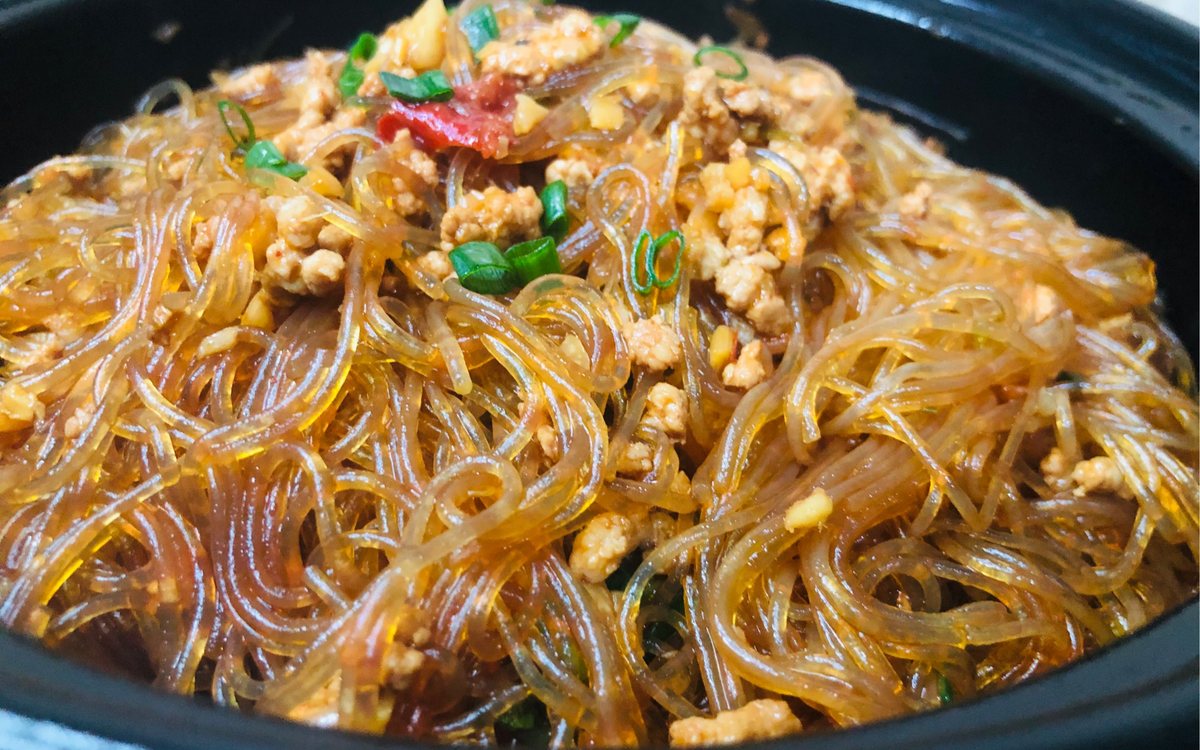
What you're eating, texturally, is two things at once. The noodles are slippery and slightly resistant, the kind of chew that makes a slurp satisfying. The pork is crisp and salty and catches in your teeth. There's scallion for a raw green bite and the oil carries the fermented heat up into your sinuses. It's not a scorching dish. It's a warm, building, oily heat that stays on your lips.
The dish should be almost dry when it comes off the heat — the sauce has been absorbed or is clinging, not pooling. That's not an accident of cooking. That's the definition. In Sichuan restaurants it's often listed as 干煸-style for exactly this reason.
Which brings me to the versions that are wrong.
The soup version. If your noodles arrive sitting in half an inch of broth, you've been served vermicelli soup with a fancy name. Glass noodles keep drinking liquid; leave them wet and five minutes later you're eating jelly. The whole point is concentration.
The meatball version. Big clumps of pork, or worse, sliced pork. Ants are small. If the pork is bigger than a peppercorn, it can't climb anything and the name collapses.
The soy-sauce version. Some kitchens skip the doubanjiang and colour it with dark soy instead. It comes out brown, tastes of salt and nothing else, and has no red oil at all. That's not a milder version of this dish. It's a different dish wearing the name.
The boiled-noodle version. Noodles cooked to the point of surrender before they hit the wok. They break into short lengths and turn the plate into a starch slurry. You can tell by looking: good ants climbing a tree has long, unbroken strands you have to lift high to get out of the plate.
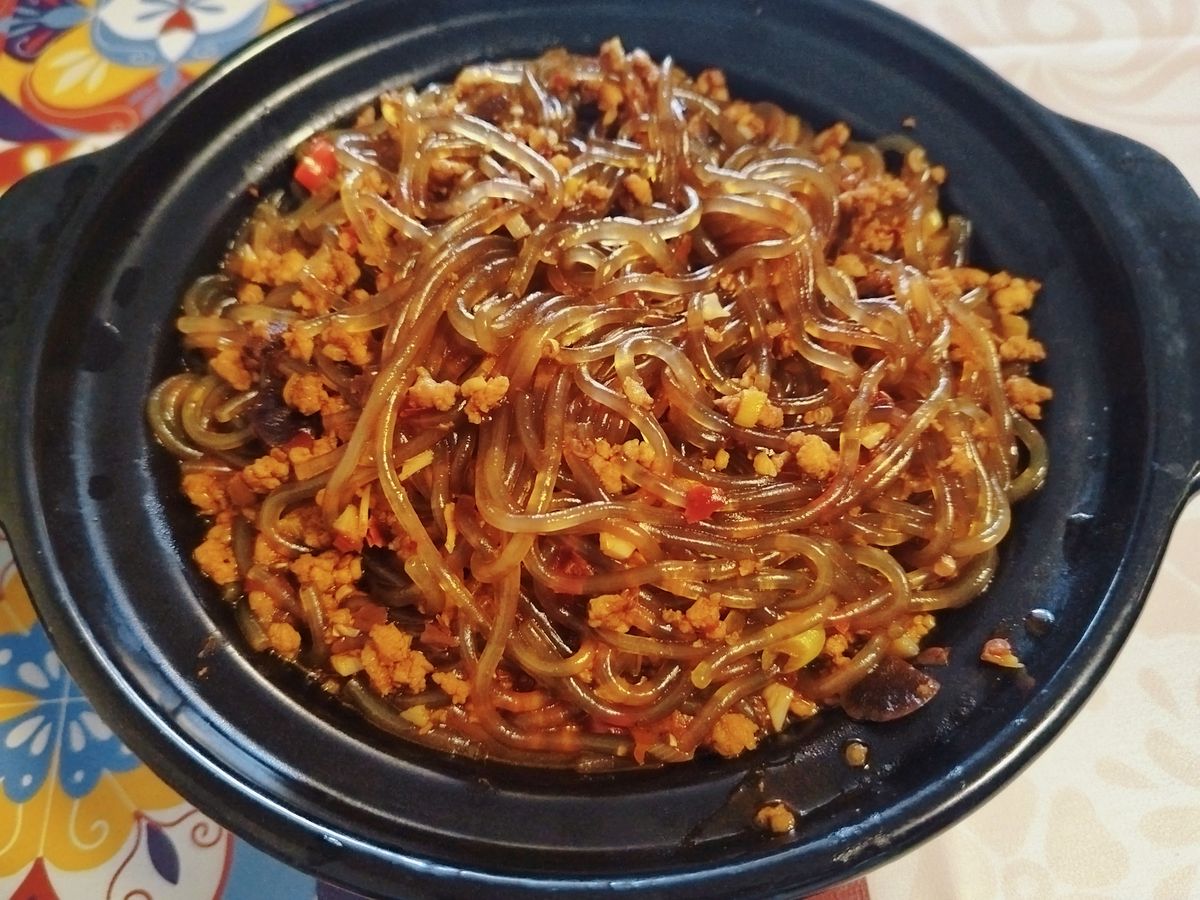
You eat it with rice. I know it's noodles on rice, and I know that looks like a mistake to anyone outside China, but the dish is seasoned for rice — salty, oily, concentrated — and a bowl of plain white rice is the correct answer. A spoon, not chopsticks, at least for the last part, because the good stuff ends up at the bottom of the plate: the crisp bits that fell off the strands, sitting in red oil, waiting.
Order it for someone who's never seen it. Watch their face when the plate lands and there isn't an ant anywhere. Then watch them go quiet about two bites in, because the name was a joke and the food wasn't.
I'll save the home-cooking breakdown for another post — getting the pork properly dry without burning the doubanjiang is the part that takes practice, and it deserves its own walkthrough. Recipe coming soon.
💬 Comments