Almond Tofu: No Tofu, No Almond, All Summer
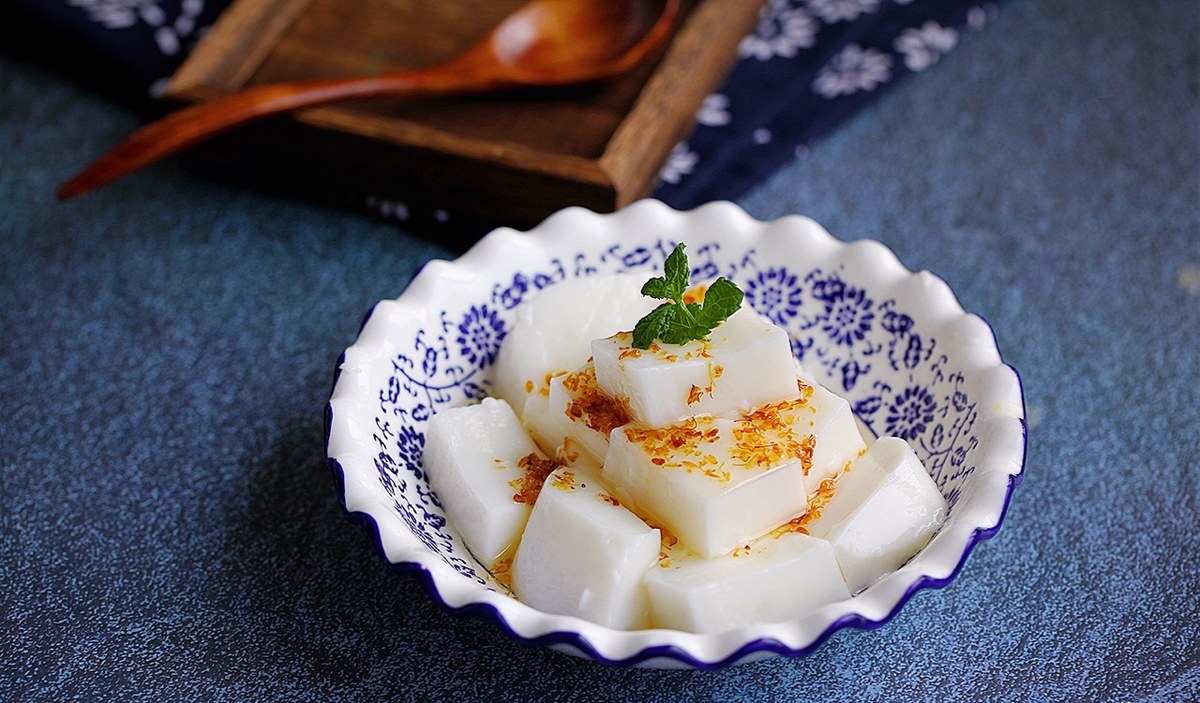
The bowl lands on the table already sweating. Condensation runs down its side and pools in a ring on the wood. Inside: a white cube, half sunk in clear syrup, with a few dried osmanthus flowers floating around it like something that drowned there. When you set the bowl down, the cube trembles. Then it holds still.
Beijing, July, the kind of afternoon where the heat comes up through your soles. I was twenty-six, in town for a week with no plan beyond walking until I got hungry, and I ducked into a sweet shop on a hutong side street for the air conditioning. The waiter set the bowl down and said the name — 杏仁豆腐 — the way you'd say the name of an old friend who isn't doing well. I asked whether it was made with almonds. He looked at me, decided the question wasn't worth a full sentence, and said: eat it.
The name is wrong twice. 杏仁豆腐 (xìngrén dòufu) means "apricot kernel tofu." English menus flattened the first word into "almond" and dropped the second half of the story. So: no almond, not the kind you eat out of a bag. The kernel comes from an apricot or a peach pit. And no tofu — no soybean, no nigari, no cloth-pressed curds. The set comes from agar or gelatin. It is a milk pudding named for what it looked like, and the name went abroad and took the recipe with it.
The Kernel, Not the Nut
What's actually in the bowl is small and unglamorous. Sweet apricot kernels (南杏, nán xìng) by the handful, a few bitter ones (北杏, běi xìng) for backbone, both soaked overnight until they soften. Then blended with water, wrung through a cloth, simmered with milk and sugar, strained again, poured into a mold and left alone until it sets.
The bitter kernels are the whole trick, and they're also why the dessert has a reputation in China for being good for your throat — the kind of thing a grandmother tells you and a lab shrugs at. They carry benzaldehyde, the same molecule that gives marzipan and almond extract their smell, plus a little prussic acid on the side, which is why nobody eats them by the handful. In a dessert, at that dilution, the trace reads as: cherry pit. Slightly dangerous. Not sweet.
That's the flavor you're chasing. Not "almond." Almond extract is a blunt instrument — one drop too many and the bowl tastes like a bar of soap. The real thing is quieter. It smells like the inside of a stone fruit, and it leaves a bitter little shadow at the back of your tongue after the sugar has gone.
A Cube That Squeaks
The set matters more than the flavor. Beijing versions use agar, and agar breaks. Your spoon goes in and the cube parts cleanly, one piece, no smear. Cantonese versions use gelatin and set softer — the pudding leans against the spoon and trembles. Both are correct. What's not correct is bounce. If the cube pushes back, somebody got nervous and doubled the agar, and you're eating a candle.
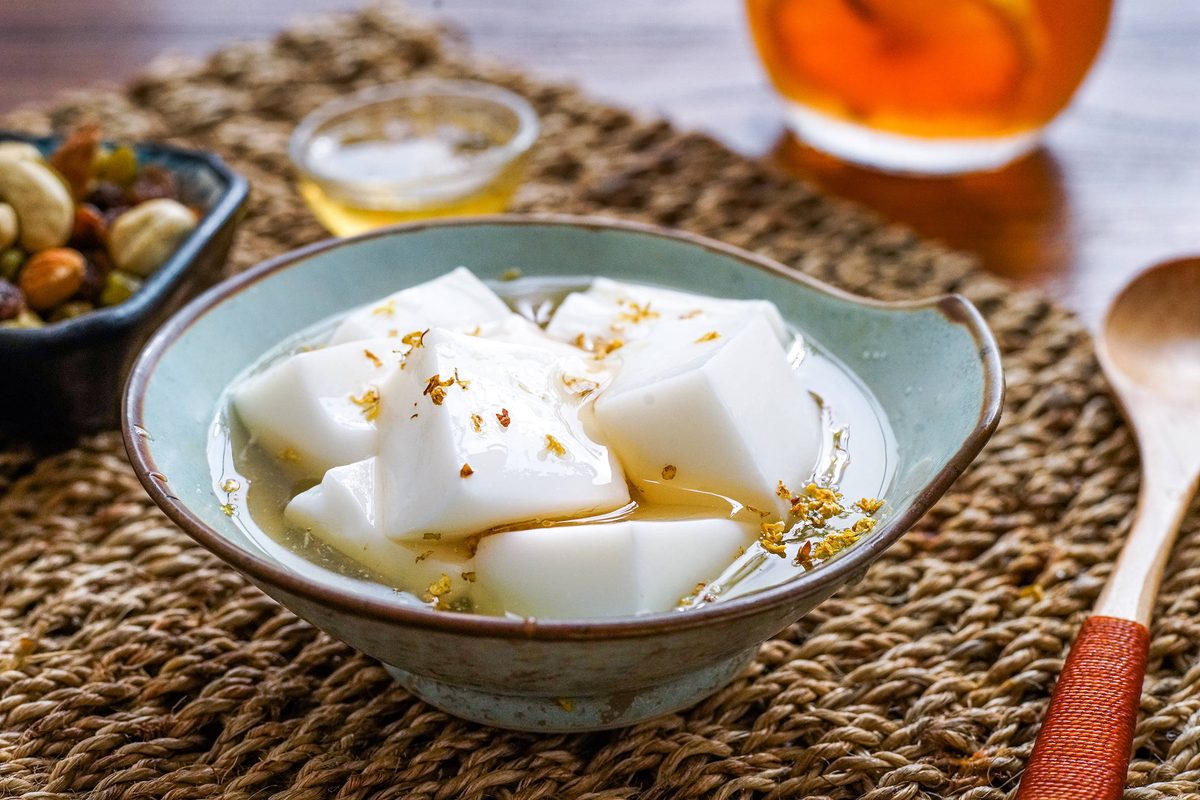
Which brings me to the enemy. You've met it: the white cube on the hotel buffet, stacked in a steel tray, sitting in syrup thick as pancake syrup, tasting of sugar and one sad drop of extract. It doesn't break. It squeaks against your teeth. Somewhere behind it is a pastry chef who thinks "almond tofu" is a texture, not a flavor.
The restaurant version is worse, because it costs fourteen dollars. A panna cotta, set with too much gelatin, a drop of extract, a scatter of something green for the photo, and a menu line that says "almond tofu" because that sounds more interesting than "cold pudding." You're paying for a translation error.
Cold, Clear, Four Spoonfuls
Properly, it comes in iced sugar water — thin, clear, barely sweet — sometimes steeped with osmanthus (桂花, guìhuā), which adds a floral note that cuts the kernel's heaviness. In Beijing you'll sometimes get a slice of hawthorn jelly (山楂糕) on the side for acid. In Shanghai it turns up at the end of a Cantonese meal, brought out with the bill, in a bowl the size of a teacup.
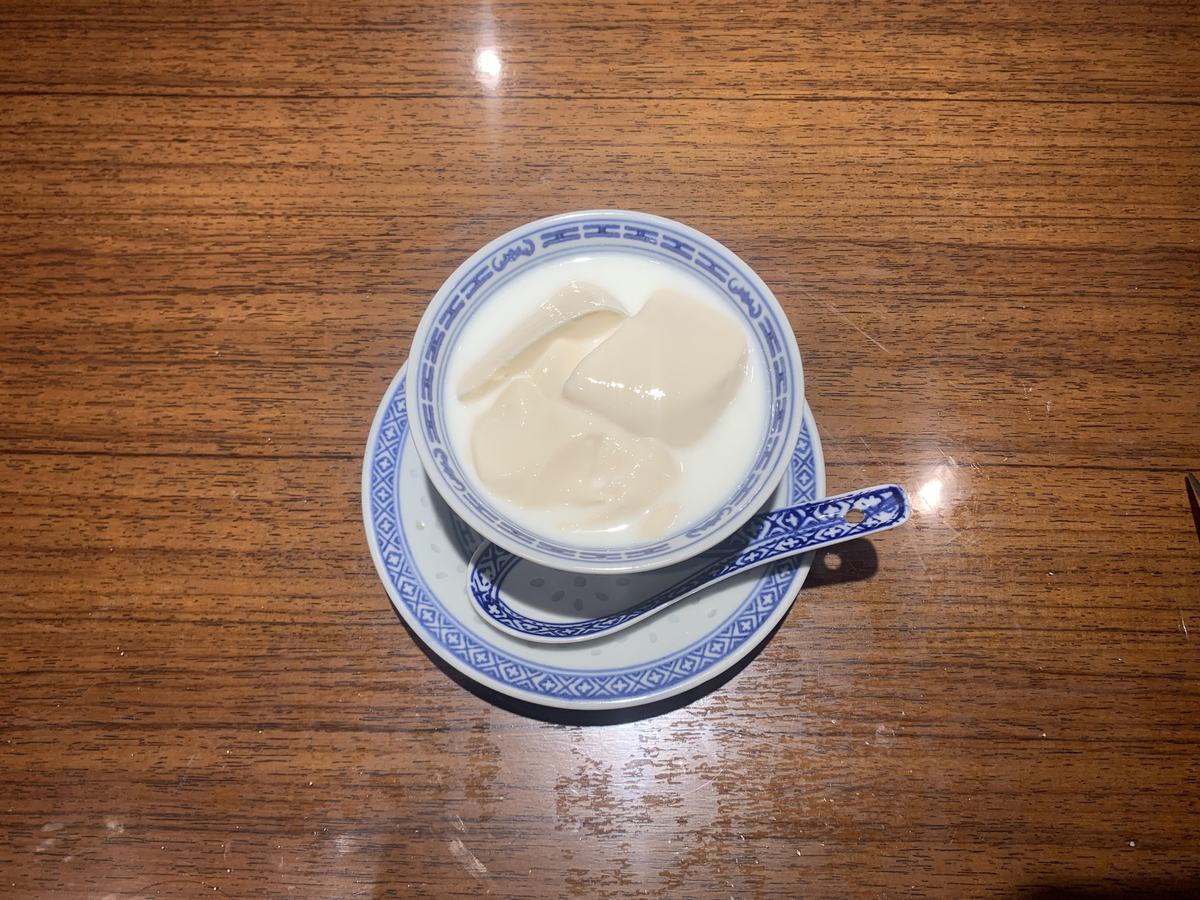
Eat it cold, and eat it fast. It's a summer dish, not a dessert course — the point is the temperature drop, the first cold thing to hit your mouth since morning. Small spoon. Don't stir; the syrup isn't a sauce, it's what keeps the kernel from tasting like medicine. Four spoonfuls and it's gone, and the bowl is still cold in your hand a minute after.
The dish is old Beijing. It shows up in Qing court menus and has been sold in the city's sweet shops for well over a century, and the recipe hasn't moved much — kernel milk, sugar, something to make it stand up. What moved is the name. Somewhere between the hutong and the English menu, "apricot kernel" became "almond," "pudding" became "tofu," and a very specific summer thing became a generic white cube.
I went back to that shop three times that week. On the last day the waiter recognized me, put the bowl down without being asked, and said, in careful English, "No almond." Then he laughed at his own joke. It was also the truth.
It costs almost nothing to make and takes about ninety seconds to eat, and it's the only dessert I know that tastes better because of what isn't in it.
Making it at home is a two-day affair — the kernels need their overnight soak, and agar punishes anyone who guesses at the ratio. That deserves its own post. Recipe coming soon.
💬 Comments