Old Bottles: What Thirty Years Does to a Baijiu Nobody Opened
The bottle sits under a lamp that is too bright, and the man holding it is not looking at the label. He has it by the neck, tilted, the way you hold a thermometer, and he is watching the line where the liquid stops.
A 1983 bottle of Moutai, 54 percent, white glass, red ribbon. The line sits about a centimetre and a half below where it sat in 1983. The trade has a word for that gap: 跑酒, running wine. It is the first thing anyone checks here, before the seal, before the paperwork, before the price.
The estimate on the card beside it is more than a used car. Inside the glass, the same liquid has been quietly eating itself for four decades, esters splitting, acids climbing, a little vapour escaping past a cap that was never built to hold forever. What the buyer carries home is not really the drink. It is the only surviving copy of a reaction that stopped being reproducible the day the bottle was filled.
Two words that are not the same word
Foreign buyers lose money here, so start with the vocabulary.
年份酒, "year liquor", is a claim about a blend. The China Alcoholic Drinks Association published a group standard in 2019, T/CBJ 2101-2019, which defines the number on the label as the weighted average age of everything in the bottle and requires that the base spirit carrying that age make up no less than 80 percent of the blend. A bottle marked fifteen years is not a bottle from 2011. It is young spirit with a large measure of much older spirit stirred through it, and the label gives you the average. Honest, and not what a foreign buyer assumes.
老酒, "old liquor", is a different object: a physical bottle, filled on a date printed on the back label, still sealed. The trade draws its line at ten years from that date. The 2015 bottle in your father's cupboard technically qualifies, and it is worth what he paid for it.
What thirty years does inside glass
Esterification keeps running. Acids and alcohols condense into the esters that carry the top of the nose, 己酸乙酯 in a 浓香, 乙酸乙酯 in a 清香, so the hard edge of new spirit softens and the smell rounds out. It is the same reaction a distillery runs on purpose in a clay jar, at a crawl, because glass gives it nothing to work with.
Hydrolysis pulls the other way, and it sets the clock. Water and ester drift back toward acid and alcohol. The drink turns sour, then thin. How fast depends almost entirely on proof: at 53 percent there is not enough free water for the reaction to run away, at 38 percent there is. Every collector in this trade says the same sentence in the same words. Low-proof baijiu does not age, it decays.
Oxidation handles the colour. A 酱香 left in glass for decades moves from clear to pale gold and sometimes amber, because the furans and diketones formed during the high-temperature 制曲 step keep polymerising in the bottle. Chinese buyers read that colour as proof of age. It is proof of age. It tells you nothing about whether the bottle is good.
I spent thirteen years watching large systems drift, and the useful lesson transfers. A sealed bottle is a process nobody is supervising. Nothing crashes. Everything degrades, at a rate set by the room it sits in.
A bottle as an asset
China is one of the few places where a sealed bottle gets treated as a bearer instrument. The association's own index of the 老酒 market runs from roughly 10 billion yuan in 2013 to about 50 billion by 2018 to more than 100 billion by 2021, and that curve was not drawn by drinkers. It was drawn by the gift economy. A case of 1980s 五粮液 was, for one generation of official, the most convenient shape a favour could take. It did not spoil. It did not look like cash. It could be handed over in a car park.
The trade has a saying that gets the order right: 买新酒,喝老酒,存名酒. Buy new liquor, drink old liquor, store famous liquor. The verbs carry the meaning. You buy this year's release because it is cheap and everywhere. You drink the bottle your family put away, because that is what it was for. You store only the names that will still be worth something in twenty years, and you accept that almost nothing in your cupboard is one of them.
My grandfather kept one bottle of 茅台 through the 1980s. Unopened, through four moves and one flood. We opened it for his eightieth birthday and a third of it was gone. What was left tasted like a memory of itself, softer, saltier, with a soy-sauce depth that a fresh bottle does not have. Nobody at that table would have traded it for a new one. That is the whole market in a single glass, and it has nothing to do with what an auction house would pay.
How to read a bottle before you pay for it
Fill line first. Photograph the bottle against a light and compare it with a known example of the same bottling. Two centimetres down over thirty years is normal. Five centimetres means it stood in a warm room behind a bad seal, and you are buying mostly air.
Check the seal, not the label. Paper can be reprinted. The original crimped 封膜 cannot be reproduced cheaply, and a wrinkled or replaced cap on a bottle claiming 1985 is the most common failure in the trade.
Then read the standard code on the back label. This filter takes ten seconds and saves the most money. GB/T 10781.1 (浓香), 10781.2 (清香), 10781.3 (米香) and GB/T 26760 (酱香) mean solid-state fermentation from grain, and those bottles are worth keeping. GB/T 20821 (液态法) and GB/T 20822 (固液法) mean neutral spirit with added flavour compounds. Those do not improve. They only get older.
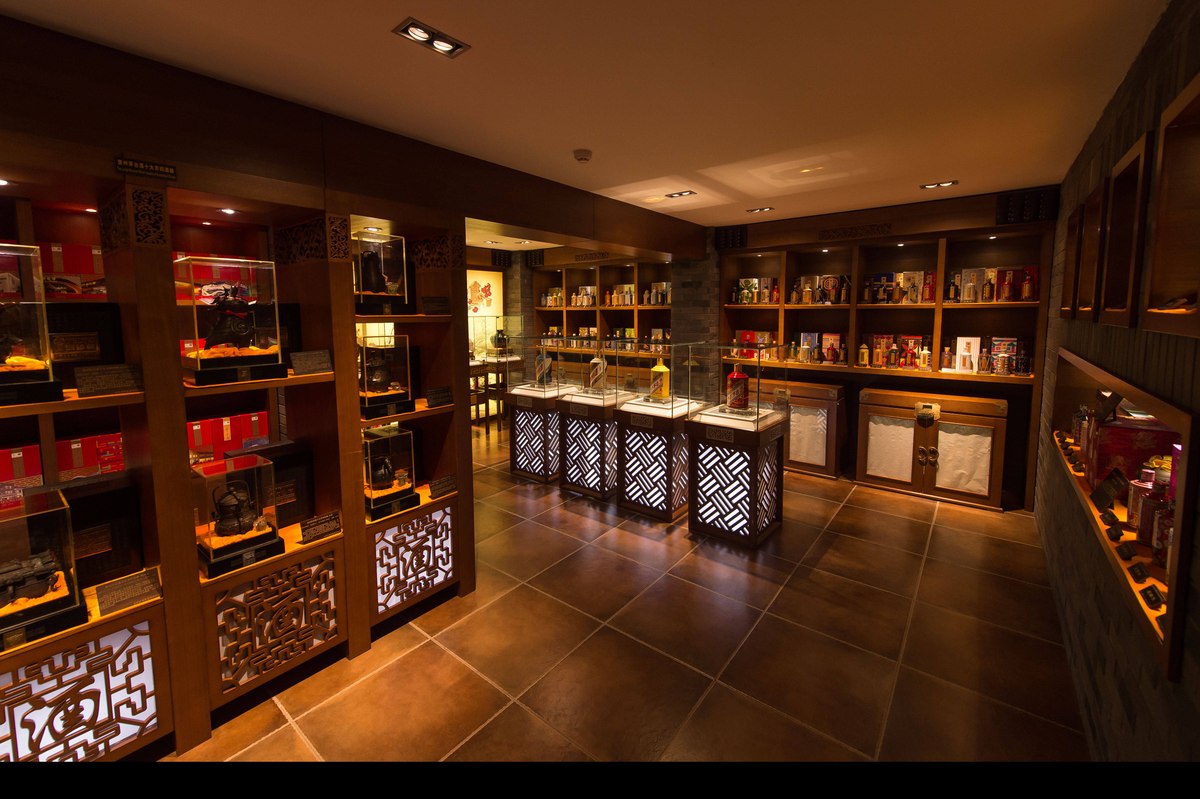
Decide what you are doing with the thing. To drink it, buy a good fill line and a boring label from a producer with a continuous record, at 50 percent or above. To keep it, buy two of the same bottling, drink one now so you know what you are giving up, and stand the other upright in the dark at a steady 15 to 20°C. Not lying down, which is for corks. Not above the stove. Not in a lit display case, which is where a great many bottles in this country are quietly dying.
And weigh it. A kitchen scale, the number written down, once a year. That tells you more about a seal than any amount of looking.
Next: Fenjiu, the clean one. The northern spirit that tastes of almost nothing, and why that turned out to be the hardest flavour in China to make.