The Moutai Puzzle: Why a Bottle Costs More Than Your Graphics Card

The Chishui River flows through Guizhou province the color of strong tea — red-brown with iron-rich silt, warm even in December. On both banks, for about fifteen kilometers, sit the distilleries that produce the most valuable spirit brand on Earth. Moutai’s market cap is larger than Diageo, the company that owns Johnnie Walker, Guinness, and Tanqueray combined. A single bottle of their Flying Fairy can cost more than an RTX 4090.
Why? The answer is not “marketing” or “Chinese nationalism” or “corruption.” The answer is microbiology.
The Qu: A Brick of Wild Microbes
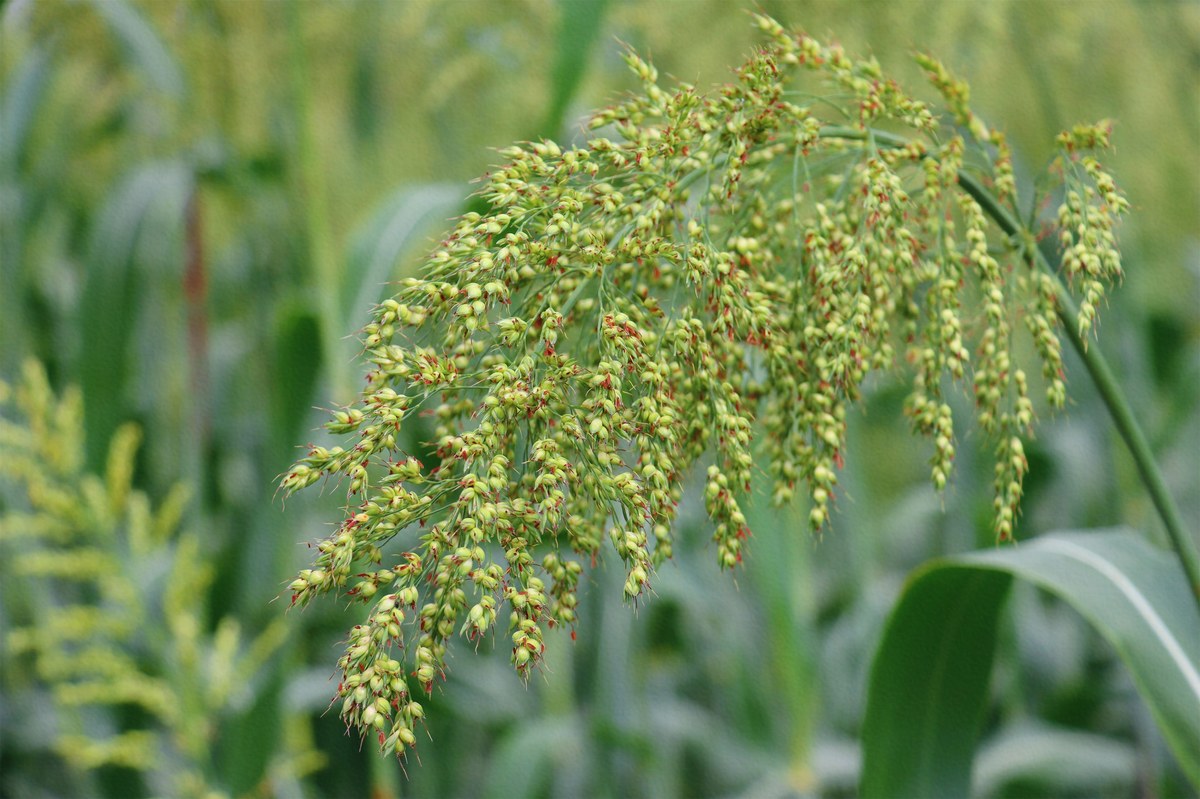
Every distilled spirit on Earth begins with a sugar source that yeast can eat. Scotch uses malted barley. Vodka uses potatoes or grain. Rum uses molasses. Baijiu uses qu (曲) — a solid-state fermentation starter made from wheat or sorghum that has been pressed into bricks and left to colonize with whatever wild microorganisms happen to be floating through the air.
This is the part that breaks Western distiller brains. In Scotland, they sterilize everything. In Kentucky, they control the yeast strain down to the laboratory level. In Guizhou, they open the windows.
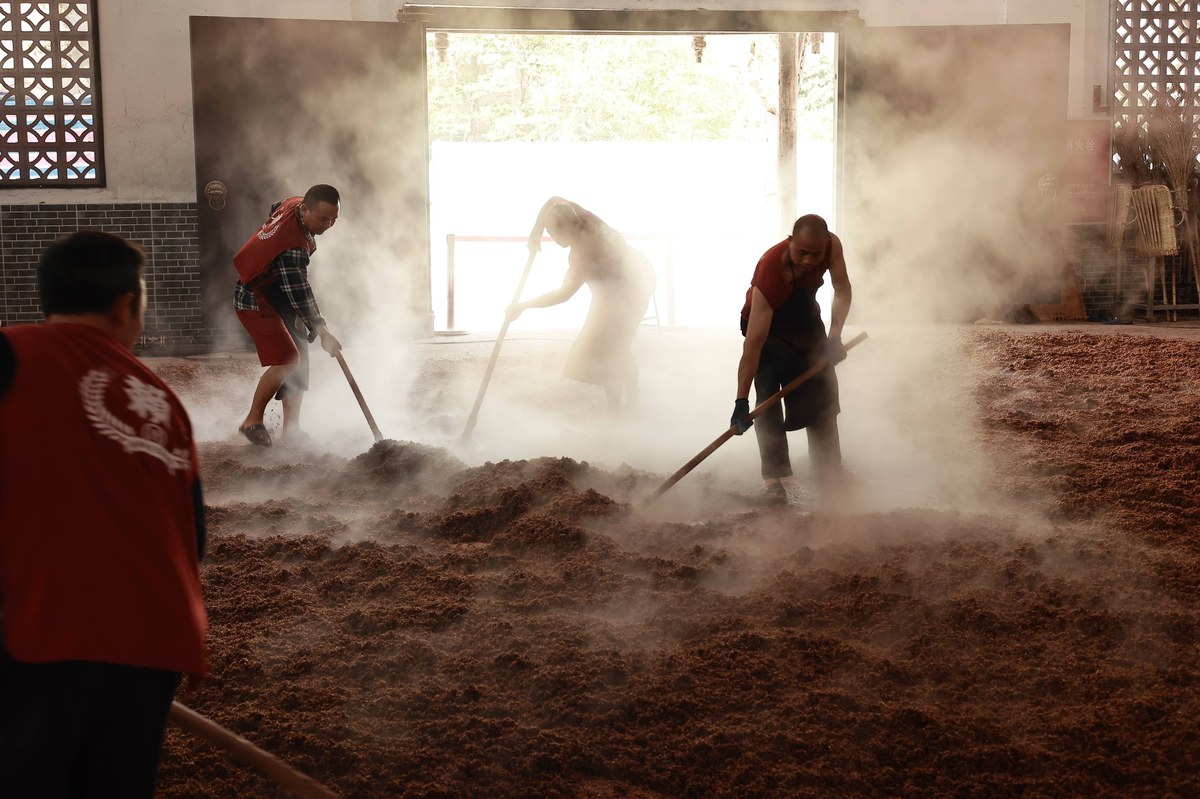
A Moutai qu brick, after months of open-air cultivation, contains over 1,900 identified species of bacteria and fungi. Nobody knows which ones matter most. The distillery’s own researchers have been trying to isolate the key strains for thirty years and have not succeeded. Attempts to recreate Moutai’s flavor profile in a different location — even using the same grains, the same water, the same process — have failed every time. The French have a word for this: terroir. The Chinese have a river valley.
The Chishui River’s unique combination of humidity, temperature swing, mineral content, and airborne microbial population cannot be replicated. The Chinese government designated the valley a protected geographical indication in 2001. You can build a Moutai distillery anywhere. You cannot make Moutai anywhere. The microbes won’t let you.
Sauce Aroma: What’s Actually in the Glass
Moutai belongs to the “sauce aroma” (jiang xiang, 酱香) category of baijiu. This is the most complex, the most expensive, and for most first-time drinkers, the most baffling of the four great baijiu aroma types.
Pour a glass. Let it sit for thirty seconds. The first thing that hits you is soy sauce — not the metaphor, the actual fermented soybean smell. Then overripe tropical fruit: pineapple that’s been on the counter one day too long. Then something nutty, almost like aged Parmesan. Then a faint petroleum note that sounds terrible on paper but in context is weirdly compelling.
If you just read that and thought “this sounds like a gas station burrito,” congratulations — you’ve identified the reason Moutai is the most misunderstood spirit in the world. The aroma profile is objectively challenging. It took me three attempts across two years before I stopped recoiling and started understanding.
The trick is temperature. Moutai is traditionally drunk warm — not hot, but body temperature, around 35-40°C. Chinese drinkers pour it into a small ceramic pitcher that sits in a bowl of warm water. At this temperature, the soy sauce note recedes and the fruit comes forward. The texture changes too. Cold Moutai is thin and aggressive. Warm Moutai is viscous and slow — it coats your mouth the way a good whisky does, and the finish lasts minutes instead of seconds.
The second trick is food. Moutai without food is a dare. Moutai with a plate of cold sliced pork belly and crushed garlic is a conversation. The fat cuts the alcohol, the garlic sharpens the savory notes, and suddenly you understand why Chinese businessmen spend three hours at a banquet table with a bottle between them.
The Banquet: Why Moutai Exists
You cannot understand Moutai without understanding the Chinese banquet. The two are inseparable in a way that no Western spirit-and-occasion pairing quite matches. Champagne and weddings comes close. Nothing else does.
At a formal Chinese dinner, the host pours. The guest receives with both hands. The first toast is always to the guest of honor, and the person toasting must finish their glass before the guest does — an asymmetry that communicates respect through minor self-sacrifice. A bottle of Moutai on the table is not a beverage. It’s a signal. It says: you matter enough for me to open the expensive bottle, and I will demonstrate this by drinking more of it than you have to.
This ritual is thousands of years old. The Chinese character for “wine” (酒) appears on oracle bones from the Shang dynasty, circa 1200 BC. Distilled baijiu specifically dates to the Yuan dynasty, when Mongol invaders brought Middle Eastern distillation technology eastward along the Silk Road. It met Chinese fermentation science, and the result was something the world had never tasted.
Moutai itself became politically significant in 1935, when Red Army soldiers passing through the town of Maotai during the Long March were treated with baijiu as a disinfectant for wounds. Zhou Enlai, later China’s premier, never forgot it. When state banquets resumed in 1949, Moutai was on the table. It has been there ever since.
Should You Buy It?
If you’re in China, yes — the basic Flying Fairy is readily available and the experience of drinking a spirit with a 2,000-year cultural backstory is worth the price of entry at least once. Start with the smallest bottle you can find. Drink it warm, with food, in company. Do not shoot it. Do not mix it with soda. These are crimes.
If you’re outside China, Moutai is hard to find at retail and frequently counterfeit when you do find it. Better entry points into sauce-aroma baijiu for the curious Western drinker include Langjiu (郎酒) and Xijiu (习酒), both from the same river valley, both far cheaper, and both honest representations of the style.
Next: Fenjiu — the clean, floral, 1,500-year-old baijiu that Cao Cao himself drank. No soy sauce notes. No petroleum. Just sorghum and time.