Baijiu 101: The Four Aromas, and Why Chinese Sort Liquor the Way They Sort Tea

On a January night in Shanghai, my uncle set a glass the size of a thimble in front of me and filled it with something clear. I was fifteen. I did what I had watched men do at weddings, tipped it back in one motion, and spent the next ten seconds convinced I had swallowed nail polish remover.
He laughed, which was fair. Then he poured a second glass, stood it in a bowl of warm water, and made me wait two minutes. When I finally smelled it, the liquid had changed species. Soy sauce. Pineapple going overripe. Something like wet stone on a hot day. Same bottle, different animal.
Years later, in a meeting room in Mountain View, a colleague asked me to explain baijiu. “It’s Chinese vodka,” I said, “except it’s made from sorghum.” I have felt mildly guilty ever since, because it is wrong in a way that matters. Vodka ferments as liquid and is rectified down to ethanol and water. Baijiu ferments in a damp heap of solid grain and comes off the still with its whole aromatic baggage intact. The Chinese built a vocabulary instead. The key term is 香型 — xiang xing, aroma type. Four of them matter.
How Baijiu Is Actually Made
Start with qu (曲). It is a brick of grain (wheat, barley, sorghum), moistened, pressed, and left in a warm room to be colonized by wild mold and yeast. Every other spirit on earth buys its microbe in a packet. Baijiu grows a garden and lets the garden decide.
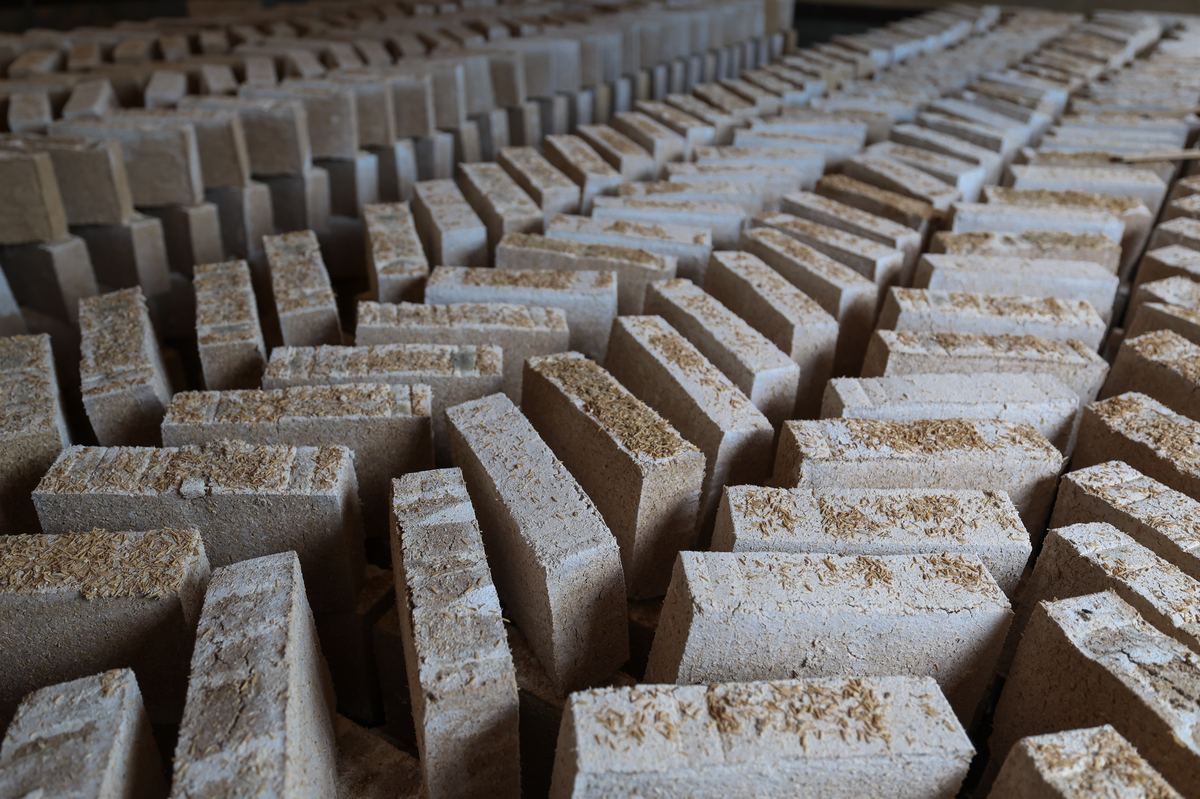
Steamed grain is mixed with crushed qu and packed into a pit or a buried jar. Not a tank of water: 固态发酵, solid-state fermentation, happens in a damp heap with almost no free liquid. That detail explains why a baijiu workshop looks like a bakery and smells like a compost heap in the best possible way.
After three to eight weeks the whole mass goes into a steamer (a 甑) and the alcohol rides out on the steam. New spirit arrives well over 60% and rests in earthenware jars that breathe through micro-pores: a year for light aroma, five for sauce aroma. Then a blender, whose palate is the real product, mixes dozens of batches into one house flavor.
The analogy I use with engineering friends: a strong-aroma pit is a server nobody has rebooted since the Ming dynasty, its whole value accumulated state, the bacterial culture in the mud walls. A light-aroma batch is a fresh container (buried jars, emptied and reset) with no persistent state, which is why the output is so clean. Sauce aroma is the legacy system nobody can fully map. The distilleries have spent decades trying to isolate the decisive microbes and have not finished.
Sauce, Strong, Light, Rice
If you have read my tea pieces you know the move: Chinese classify by process, then argue about it for a century. Tea gets six types, liquor gets four aromas, and the label tells you which you are holding.
Light aroma (清香) — Fenjiu from Shanxi, and the cheap Beijing erguotou any Chinese grocer sells. It ferments in ceramic jars instead of mud, so none of the funky bacterial notes survive. Pear skin, cucumber, wet stone, a little masa. Thin-edged and dry, with a warm finish that arrives late. Oldest style in China.
Strong aroma (浓香) — Wuliangye, Luzhou Laojiao, Jiannanchun, Yanghe, Gujinggong. About two-thirds of all baijiu sold in China. It ferments in mud pits, some in continuous use since the 1570s; the bacteria in that mud are the flavor. The signature note is a compound called ethyl hexanoate: ripe pineapple, banana bread, a sweetness that arrives before the burn. Full and round. When a business dinner has one bottle on the table and nobody is showing off, this is it.
Sauce aroma (酱香) — Moutai and its neighbors along the Chishui River: Langjiu, Xijiu, plus the cheaper Prince line. High-temperature qu, eight fermentations across a year, five years of aging, and a qu brick carrying over 1,900 identified microbes. Fermented soybean, dried apricot, toasted sesame, a faint petrol note that stops being off-putting around your third glass. Most expensive, most savory, worst first impression. (Why it costs what it costs: The Moutai Puzzle.)
Rice aroma (米香) — Guilin Sanhua is the standard-bearer, fermented from rice and usually bottled at a gentler strength than the other three. It tastes like distilled jiuniang, the sweet fermented rice pudding in every Chinese market: honey, steamed rice, soft landing.
A dozen smaller categories exist — Feng aroma in Shaanxi, Chi aroma in Guangdong, aged in contact with a piece of cooked pork fat — but those four cover nearly every bottle you will meet.
Why the Labels Matter
The categories are not folklore. In 1952 the new government convened a national liquor conference in Beijing and anointed four famous liquors: Moutai, Fenjiu, Xifeng, Luzhou Laojiao. Twenty-seven years later, at a 1979 evaluation in Dalian, organizers began sorting entries by aroma type, so a clean Shanxi spirit would stop losing points to a Sichuan one for not being funky enough. The sorting stuck, for the same reason appellations stuck in France: name what you make and you can price it.
The result is social. Aroma type on a label reads like a price tag with opinions attached. Light aroma is the everyday drink — the north, the home table, the bottle kept in the cupboard. Strong aroma is the generous, loud banquet default. Sauce aroma means somebody in the room has decided to spend real money. Order wrong at a table of older relatives and you will be corrected gently, and completely.
How to Drink Your First Glass
Begin with light aroma. Yellow-label Fenjiu or a cheap erguotou costs less than a pint at any Chinese grocery abroad, and it needs no defense attorney.
Three rules, each with a reason. Do not shoot it. Baijiu runs 40–55% alcohol with more aromatic density than any Western spirit, so a shot delivers all of the burn and none of the flavor. Smell once immediately, then again after thirty seconds — the alcohol lifts off the top, and what is underneath is the aroma type this article has been about. Eat fat. Cold sliced pork, peanuts, dumplings, hotpot. Banquet menus are rich for a reason: fat coats the mouth and the spirit stops attacking. Keep water on the table and skip carbonated mixers. Never chill a light-aroma bottle or serve a sauce-aroma one fridge-cold — the first wants room temperature, the second 35–40°C in a warm water bath — and if you plan to survive a Chinese wedding, do not alternate baijiu with beer.
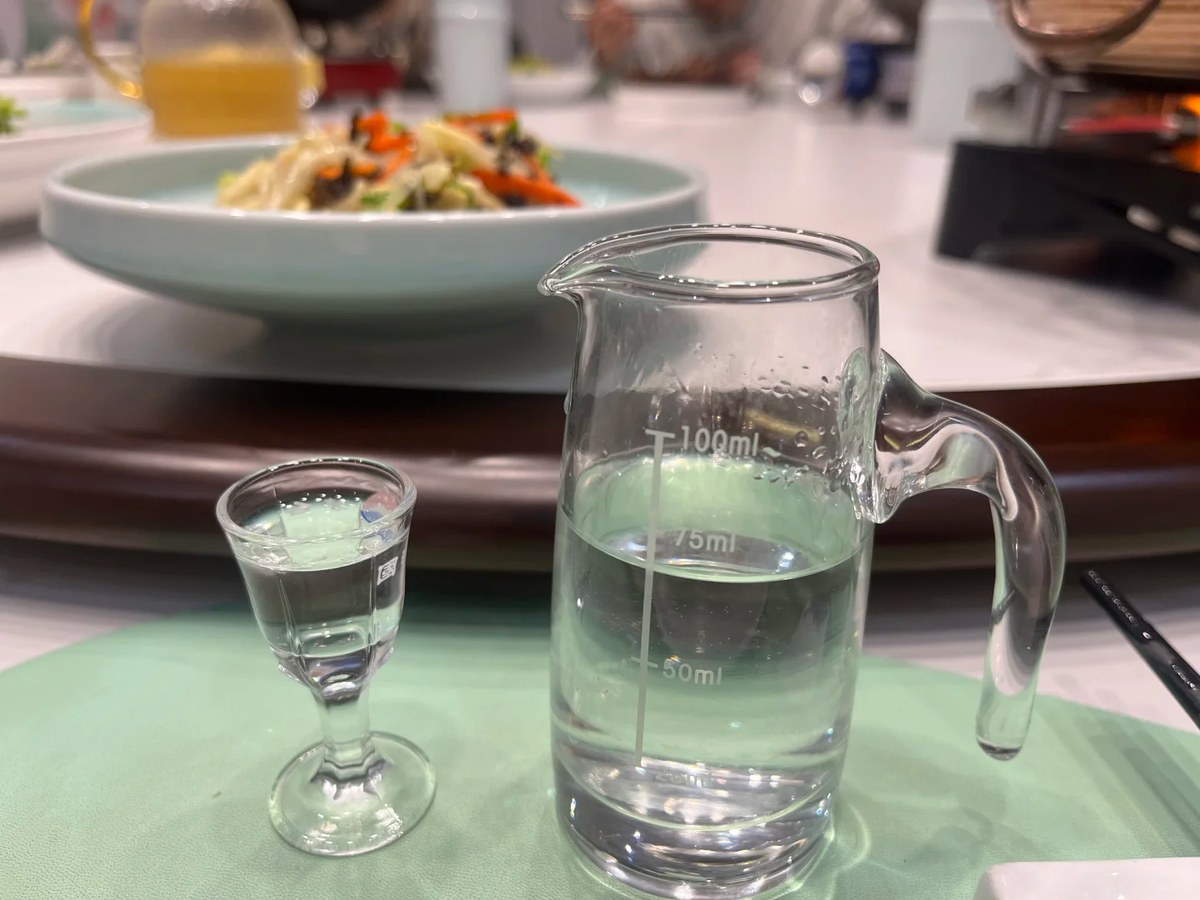
When you buy, read the back label for 固态发酵, solid-state fermentation. If you see 液态法 or 食用酒精 in the ingredients instead, it is grain alcohol with flavoring added. Fine in a braise. A waste of your first evening.
Next: the pit that never stopped. A fermentation cellar in Luzhou has been working continuously since 1573 — the same mud, the same bacteria, kept alive by hand down nineteen generations. I went to find out what the men who tend it actually do all day.