The Half Bottle Problem: What Really Happens to Baijiu After You Open It
There is a bottle of 53 percent baijiu on top of my kitchen cabinet that I opened in February, for a dinner that went later than planned. Next to it stands a bottle of 花雕 huangjiu I opened last Tuesday. The huangjiu is already wrong. It has gone from something round and slightly sweet to something that tastes like dry sherry left in the sun. The baijiu, seven months on, is still recognisably itself, though the top of it has flattened out and the finish burns a little harder than I remember.
Nobody warns you about this part. Every guide tells you which bottle to buy, which glass to use, what to eat with it. Almost none of them tell you what the liquid does once the seal is broken and the bottle goes back on the shelf, half full, next to the rice cooker.
Baijiu is not wine. It does not improve in your cupboard. It only gets quieter, then slightly sour, then slowly hot. The good news is that at 50 percent and above you have years, not days, before anyone notices. The bad news is that the clock starts the moment you twist the cap, and it never stops.
What is actually in the bottle
Baijiu is ethanol, water, and somewhere between several hundred and well over a thousand trace compounds, most of them at parts per million. The ones that matter for this article are the esters, the molecules that give baijiu its fruit and its lift. In 浓香型 (nongxiang, strong aroma) the dominant one is ethyl caproate, 己酸乙酯. In 清香型 it is ethyl acetate, lighter and sharper. In 酱香型 there is no single dominant ester at all, which is one reason that aroma is so hard to describe and so easy to fake badly.
Esters are not fixed in place. In the presence of water they hydrolyse, splitting back into an acid and an alcohol; in the presence of the right acid and alcohol they re-form. It is an equilibrium, and it sits on a knife edge that depends on concentration, temperature, and how much ethanol is left in the vessel. This is why an unopened bottle is stable and an opened one is not. You did not "let it breathe". You changed the ratios.
Two more things happen once air is in the bottle. Ethanol leaves faster than water, so the strength drops, slowly at first and then faster as the headspace grows. And oxygen attacks the aldehydes, turning some of them toward acetic acid. That is the sour note in a bottle that has been open too long. Not vinegar, not yet. Just a thin, sweaty edge where the fruit used to be.
The category is legally defined as an unadulterated fermented product. Strong-aroma baijiu, GB/T 10781.1-2021, is grain fermented with 大曲 in mud pits, 「不直接或间接添加食用酒精及非白酒发酵产生的呈香呈味物质」: no added edible alcohol, no aroma compound that did not come out of its own fermentation. Which makes it strange that nobody tells you how fast that unadulterated product decays at home.
The vessel that ages, and the one that does not
Here is the part that took me years to understand, and it is the reason the bottle on your shelf behaves the way it does. Baijiu ages in two stages, and neither of them happens in glass.
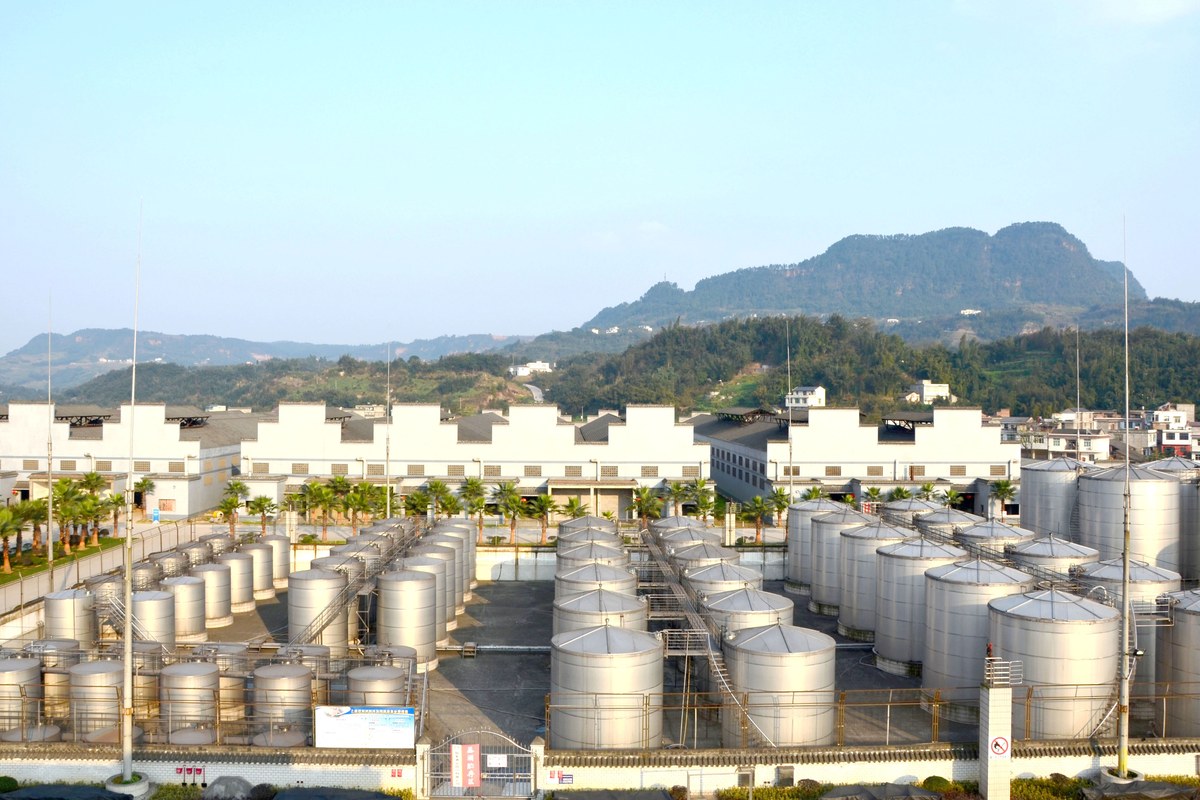
First it rests in 陶坛, unglazed clay jars. Clay breathes. A small, controlled amount of oxygen crosses the wall, esters recombine, the sharp aldehydes soften, and the spirit loses that raw, newly distilled edge. Sauce-aroma base spirits sit in these jars for three to five years before they are considered ready for blending. Strong-aroma base spirits usually get one to three. Then the spirit moves into stainless steel, where nothing happens at all, and that is the point: steel holds the blend still so the profile does not drift before bottling.
Then it goes into glass, which is the most inert container in the whole chain. Nothing gets in, nothing gets out. Ageing stops dead. A bottle of 15-year baijiu is not 15 years old in the way a 15-year whisky is; it is a blend that was aged for some years and then held in suspension. The label's number describes the past, not the future.
For scale: China distilled about 4.49 billion litres of baijiu in 2023, according to the National Bureau of Statistics. Almost all of it is drunk within a year of leaving the plant. The idea that a bottle improves on your shelf is not a tradition, it is a side effect of the fact that spirits are stable enough to sit there without spoiling.
Why 53 percent is not a magic number
You will hear that 53 percent is the perfect strength because the ethanol and water molecules are most tightly bound there, and that this is why the most famous bottle in the country is 53 percent. The claim is everywhere in Chinese drinks writing. It is also mostly an argument, not a measurement. Ethanol-water mixtures do show non-ideal behaviour, and there are concentrations where the hydrogen bonding is more structured, but the idea that 53.0 is a sweet spot with a measurable effect on how a bottle keeps has never been shown to my satisfaction.
What 53 percent does buy you is mathematical. At 53 percent there is less water in the bottle for the esters to hydrolyse against, and the ethanol layer at the surface is thick enough to slow oxygen ingress. A 38 percent bottle has more water, less ethanol, and a shorter life once opened. Same chemistry, faster clock.
The man I buy old bottles from at the Yunzhou antique market in Shanghai, who has been doing this since the 1990s, put it more bluntly when I asked him which vintage keeps best. He said customers always want to talk about the year. He looks at the cap. A bottle with a good seal from a bad year outdrinks a great year with a dried-out gasket, and he has opened enough of both to be sure.
What the Chinese do with the last third
In a Chinese house, a half-empty bottle of baijiu is not a problem to be solved. It is furniture. It sits in the cabinet behind the glasses and comes out when a brother-in-law arrives unannounced, or on the anniversary of something. The bottle is not being aged. It is being kept, which is a different thing and a much older habit.
存酒, keeping wine, is a gesture with a social meaning attached: you are holding something back for a person who has not arrived yet. Drinking the last third alone would end the sentence. Leaving it means someone might still come. The cost of that sentiment is a shelf of bottles at 40 percent and falling, which is fine as long as you know what you are pouring and do not serve it to a guest as if it were the good stuff.
Four rules that actually matter
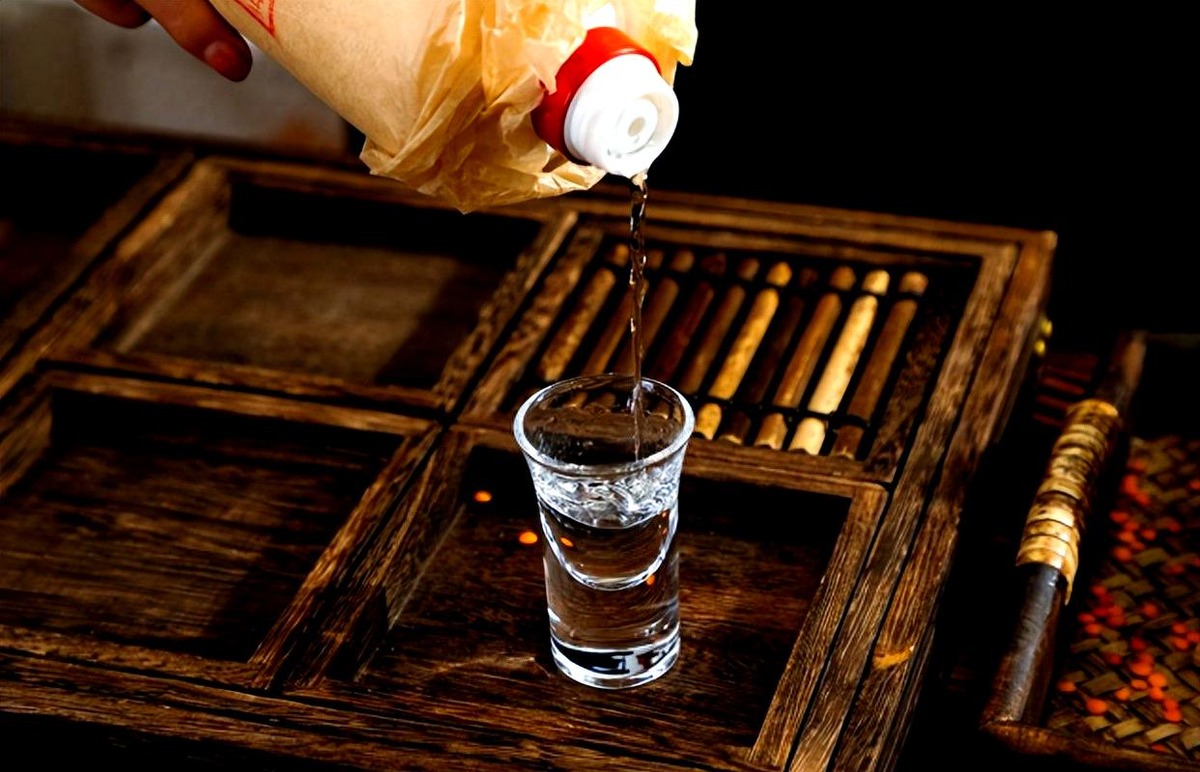
Stand it up. Lying down is for wine with corks. A baijiu bottle on its side puts high-proof spirit against the gasket for years, and the gasket loses. Upright, in the dark, is the whole trick.
Keep the temperature boring. Between 15 and 20°C, and steady. The cabinet above the stove is the worst place in the house: every time you cook, the bottle warms and cools, and every cycle pushes a little vapour past the cap. Kitchen cabinets are where baijiu goes to die quietly.
Shrink the headspace. When a bottle drops below half, pour the remainder into a smaller bottle, 250ml or 100ml, filled to the neck. The enemy is the ratio of air to liquid, not the air itself. A half-full litre bottle is a litre of air with some baijiu in it.
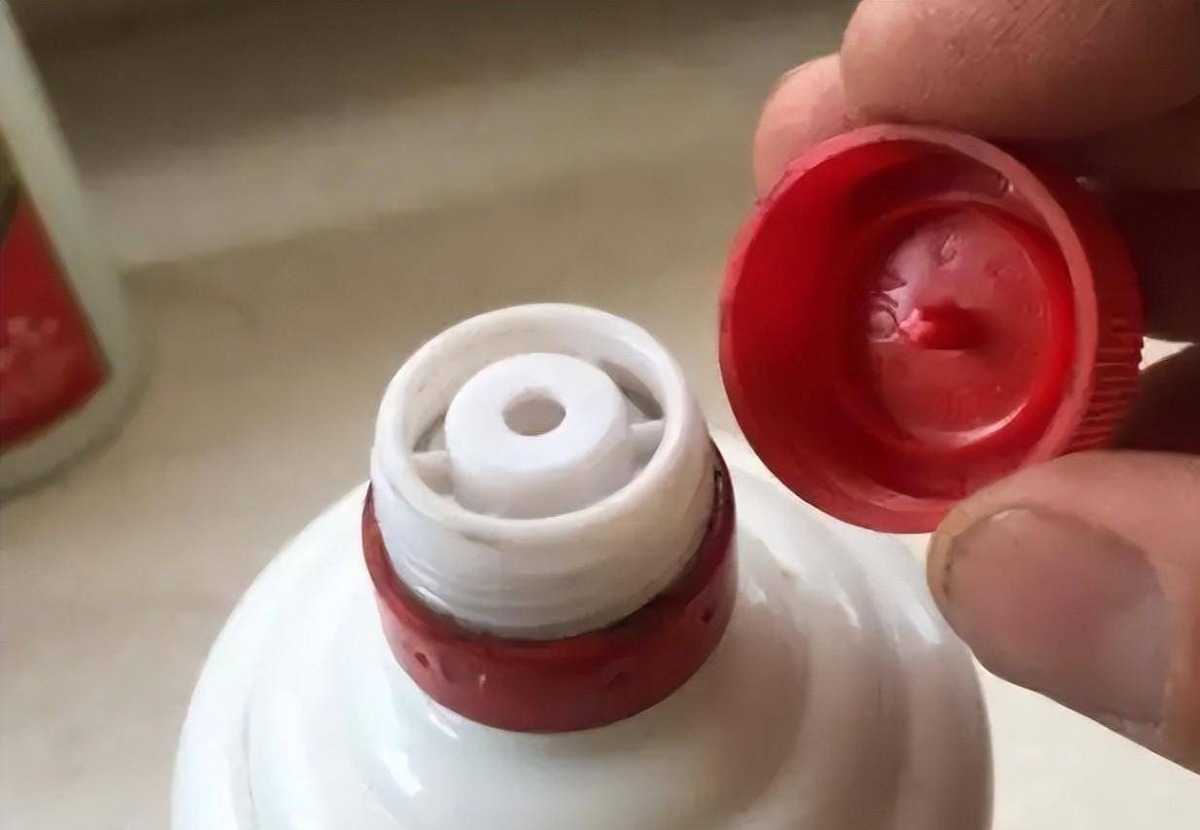
Wrap the cap. A strip of parafilm or cling film around the neck, changed every few months, does more for a bottle than any amount of careful storage. It is what the old-bottle trade does, and it costs nothing.
The timelines, roughly. A 50 percent-plus bottle stays drinkable for a year or two after opening, and noticeably softer after six months. A 38 to 42 percent bottle is fading by month three. Huangjiu is a different animal: once opened, it goes in the fridge and it is good for three to five days, a week at the outside. Warm it in a water bath when you pour it, not in the bottle.
What you should not do: freeze it, microwave it, put it in sunlight to "revive" it, or drop a 话梅 in to cover the sourness. All four are things people actually do. None of them work, and the last one ruins a bottle that was merely tired.
The honest answer
If you are buying baijiu to keep, buy two bottles of the same thing. Drink one. Leave the other sealed, upright, in the dark, and forget about it. Sealed and unopened, a bottle will hold its character for a decade or more, because nothing is happening inside it. Opened, it is a countdown, and the only real decision is whether you finish it with company or alone.
I finished the February bottle last week. It was not the same drink I opened. It was still good, in the way that a conversation resumed after seven months is still good. The huangjiu went down the sink.
Next: the rules of the table. Who toasts whom, why your glass sits lower than his, and the three things a foreigner does at a Chinese dinner that are read as insults without anyone saying so.